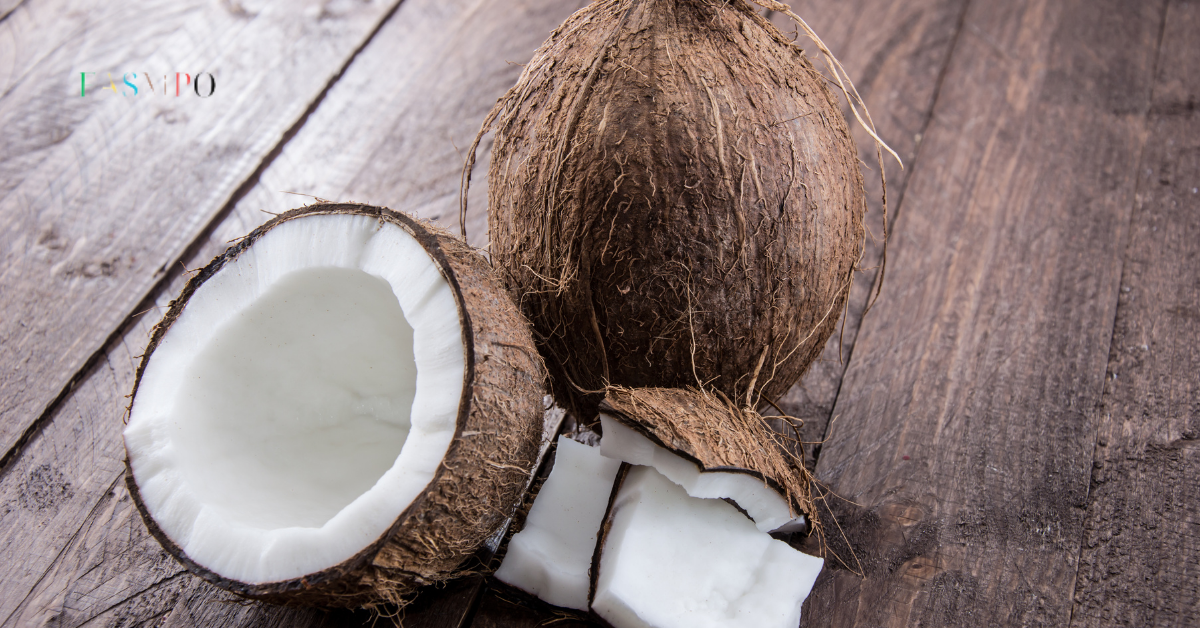
Learn about popular types of dried coconut in Vietnam such as shredded dried coconut, coconut flakes, coconut chips, and shredded coconut, and how to identify quality dried coconut by color, smell, moisture content, etc.
Dried coconut is a familiar ingredient in Vietnamese cuisine and a valuable commodity in the food processing, confectionery, beverage, and export industries. When mentioning Vietnamese dried coconut, many people simply think of the dried coconut flesh. However, in reality, there are many different types of dried coconut, classified according to the ripeness of the coconut, the shape of the finished product, the fat content, the drying method, and the intended use.
Based on my experience monitoring the agricultural and food ingredient market, I've found that understanding the different types of dried coconut will help buyers choose the right product, avoiding confusion between raw dried coconut, dried coconut meat, dried shredded coconut, crispy dried coconut, or industrially processed coconut chips. This is especially important if you're buying dried coconut for business, confectionery production, beverage making, toppings, or export; recognizing quality is crucial.
In this article, fastmpo.com will explore the common types of dried coconut in Vietnam, the characteristics of each type, and how to check the quality of dried coconut using sensory evaluation such as smell, taste, color, moisture content, fat content, and food safety criteria.
What is Vietnamese dried coconut?
Dried coconut It can be understood in two common senses. The first is a mature coconut with a dried shell, often used for extracting coconut flesh, pressing oil, making coconut milk, or processing into other products. The second is the coconut flesh that has been separated, processed, and dried into forms such as shredded coconut, coconut chips, coconut slices, or crispy dried coconut.
In Vietnam, coconuts are widely grown in the Mekong Delta provinces, especially Ben Tre, Tra Vinh, Tien Giang, Vinh Long, and some coastal areas of Central Vietnam. Thanks to the tropical climate, Vietnamese coconuts typically have thick flesh, a naturally rich flavor, and a distinctive aroma. This is an important foundation for creating high-value dried coconut products.
Dried coconut is not only used in households but is also an important ingredient for the confectionery industry, instant food, nut milk, granola, cereals, ice cream, tea, cookies, mooncakes, coconut cakes, coconut candy, and many export products.
_20260528194035.png)
Popular types of dried coconut in Vietnam today
1. Whole dried coconut
Whole dried coconuts are mature coconuts that have been harvested when the coconut flesh reaches a certain thickness and richness. This type usually has a dry outer shell, brown coconut fiber, a hard shell, and white coconut flesh inside.
Whole dried coconuts are commonly used to extract fresh coconut flesh, press coconut milk, make coconut oil, process coconut candy, or as raw material for factories producing shredded and dried coconut. When choosing whole dried coconuts, buyers should pay attention to the weight of the fruit, the sound of water inside, the dryness of the shell, and any cracks or breaks.
A good dried coconut should feel firm in your hand, have no sour smell, no cracks in the shell, no mold around the eyes, and no signs of rot inside. If you can still hear water splashing when you gently shake it, it's likely a mature coconut that isn't spoiled yet. If the coconut is too light, has a strange smell, or the eyes are soft, buyers should avoid it.
2. Dried coconut flakes
Dried coconut flesh is the white inner part of a mature coconut, separated from the shell and can be sun-dried or oven-dried to reduce moisture content. It is used as a raw material for various products such as coconut oil, coconut flour, dried shredded coconut, and animal feed, depending on the quality grade.
High-quality dried coconut flakes typically have a natural ivory white color, a mild, creamy aroma, no rancid oil smell, no mold spots, and are not unusually dark yellow. If the coconut flakes are unusually white, buyers should be cautious as the product may have undergone improper bleaching.
This type of dried coconut flesh is usually purchased in large quantities by processing facilities. The quality of the coconut flesh directly affects the color, flavor, and richness of the final product.
_20260528194105.png)
3. Dried shredded coconut
Dried shredded coconut is a product made from the white flesh of the coconut, which is then shredded, dried, and sorted by particle size. It is one of the most popular types of dried coconut in the food industry.
Shredded coconut is typically categorized into fine grade, medium grade, or coarse grade. The fine grade is commonly used as a filling for cakes, cookies, candies, nutritional bars, or mixed into batters. The medium and coarse grades are often used for sprinkling on top of cakes, as toppings, in granola, decorating desserts, or in cooking.
Good quality shredded coconut should be white or off-white in color, have a natural coconut aroma, be loose and not clumpy, not damp to the touch, and free from the smell of old oil. When tasted, the product should have a mild creamy flavor, not sour, not bitter, and without any strange gritty texture.
4. Dried coconut slices or coconut flakes
Dried coconut flakes, also known as coconut flakes, are thinly sliced and dried pieces of coconut flesh. These flakes are larger than shredded coconut and are often used to add crispness, as a garnish, or as a topping for cakes, ice cream, yogurt, cereals, and other healthy dishes.
Coconut flakes have the advantage of retaining their beautiful shape, creating a premium feel and being easily recognizable by the naked eye. When properly dried, the coconut slices are light in color, not burnt at the edges, not excessively crumbly, and have a mild aroma.
Depending on the intended use, coconut flakes can be unsweetened, sweetened, roasted, or crispy. In the high-end food industry, unsweetened varieties that retain their natural color are generally preferred because they are easier to incorporate into a wider range of recipes.
5. Dried coconut chips
Dried coconut chips are larger or thicker slices of coconut than flakes, usually dried until crispy for direct consumption as a snack. Some products may be coated with sugar, salt, cocoa, coffee, honey, or other flavors.
This type is suitable for the fast-moving consumer goods market, gifts, snacks, and retail packaged products. Good coconut chips are usually evenly crispy, not too hard, not burnt, not too sweet, and retain the rich, creamy aroma of coconut.
When buying coconut chips, consumers should carefully read the ingredients. For a healthy diet, prioritize low-sugar varieties, those without strong artificial flavors, and those with clear information about the producer.
6. Dried shredded coconut
Dried shredded coconut refers to small pieces of coconut that can be generated during grating, cutting, or screening processes, or are produced specifically for industrial purposes. This type is commonly used in fillings for cakes and candies, in mixes, energy bars, cookies, or other products where maintaining the shape of coconut slices is not necessary.
The advantages of dried shredded coconut are its reasonable price, ease of mixing, and suitability for large-scale production. However, buyers need to carefully check the uniformity, cleanliness, moisture content, and taste. Low-quality shredded coconut is often contaminated, clumpy, has a rancid oil smell, or inconsistent color.
7. Crispy dried coconut, ready to eat.
Crispy dried coconut is a ready-to-eat product. Unlike industrially dried shredded coconut, this type usually has its own formula for sweetness, crispness, and flavor. Some products are packaged in small portions, suitable as a snack, a topping for bubble tea, ice cream, desserts, yogurt, or cereal.
The quality of crispy dried coconut depends heavily on the raw materials, drying technology, and post-drying storage methods. A good product should be crispy but not dry, fragrant but not overpoweringly flavored, moderately sweet, and should not become soggy too quickly after opening the package.
_20260528194123.png)
8. Organic dried coconut
Organic dried coconut is a product made from coconuts grown according to organic standards, with limited use of synthetic chemicals and a stricter quality control process. This type is usually aimed at the export market, high-end consumers, or clean food brands.
Organic dried coconut can come in the form of shredded coconut, flakes, chips, or coconut powder. The key is that the product needs to have clear certification, be traceable, and meet the requirements of the target market.
Buyers shouldn't rely solely on the word "organic" on the packaging. They should check the certification, issuing authority, batch code, production date, expiration date, and manufacturer information.
How to identify quality dried coconut
1. Observe the colors.
Color is the first indicator of quality dried coconut. High-quality dried coconut usually has a natural white, off-white, or light creamy yellow color depending on the drying method. The color should be relatively uniform, without unusual green, black, gray, or dark yellow spots.
If coconuts are excessively white, buyers should carefully check their origin and processing methods. Beautifully white coconuts are good, but unusually white ones may raise suspicions of improper coloring. Conversely, coconuts that are yellowish-brown, burnt, or discolored may be due to over-drying, prolonged storage, or substandard raw materials.
_20260528194136.png)
2. Check the scent.
Good quality dried coconut has a natural, mild, and pleasant creamy aroma. When the packaging is opened, the coconut scent should be distinct but not pungent. If the product smells sour, musty, rancid, burnt, or chemically scented, it should not be used.
The rancid smell is a fairly common problem with dried coconuts that have been stored for a long time or exposed to air, high temperatures, and light. Because coconuts have a natural fat content, if not stored properly, the fat can oxidize, causing the product to lose its aroma and quality.
3. Feel the dryness and texture.
High-quality dried coconut should be dry, loose, non-sticky, and free of large clumps. When gently squeezed, the product should not be damp, sticky, or clumpy. For dried shredded coconut and coconut chips, the looseness is a very important factor as it indicates that the product has been properly dried and preserved.
If coconuts are clumping together, it could be due to high moisture content, moisture absorption during transportation, or leaky packaging. Moist products are prone to mold growth, reducing shelf life and affecting the quality of the finished product when used in manufacturing.
4. Taste the flavor.
When tasted, good quality dried coconut has a mild, creamy flavor, a naturally sweet aftertaste, and no bitterness. For unsweetened products, the sweetness isn't overpowering but still retains a characteristic creamy texture. For sweetened products, the sweetness should be balanced, not completely overpowering the coconut flavor.
If the coconut tastes sour, bitter, burnt, or rancid, it's a sign that the product has deteriorated in quality. For raw materials, even just one batch of coconut with an unsatisfactory taste can affect an entire batch of cakes, candies, or processed foods.
5. Check for size uniformity.
For shredded coconut, coconut flakes, or coconut chips, uniform size results in a more aesthetically pleasing and stable product during processing. Shredded coconut used in industry usually requires clear sorting by size. Coconut flakes and chips with too many broken pieces will have reduced sensory value.
Bulk buyers should request samples beforehand to check the percentage of broken pieces, uniformity, and mixability in the actual formula. Don't rely solely on product photos, as they may not accurately reflect the quality of the entire batch.
_20260528194147.png)
6. Check the packaging and label information.
A reliable dried coconut product should have clear information about the product name, ingredients, weight, production date, expiration date, storage instructions, manufacturer's name, and contact address. For export or factory-grade products, additional information such as lot code, quality standards, and relevant certifications is required.
Packaging must be airtight, clean, free from tears, unusual bulges, and signs of moisture absorption. For retail packaging, zip-lock packaging or materials that limit air exposure are preferred.
7. Check food safety certifications.
For businesses that purchase dried coconut as a raw material, certification is a crucial factor. Depending on the market and intended use, certifications such as ISO, HACCP, BRC, Halal, Kosher, FDA, or organic certification may be required.
Certification is not a complete replacement for actual quality inspection, but it is an important basis for evaluating a supplier's production capacity and control system. For large orders, buyers should request a Certificate of Analysis (COA), product specifications, and test samples if necessary.
Common problems found in poor-quality dried coconut
Poor quality dried coconut often exhibits one or more signs such as a dark yellow color, rancid or musty odor, sour taste, high moisture content, clumping, impurities, excessive crumbling, or leaky packaging. Some products may also show inconsistencies between bags within the same batch.
The causes could stem from substandard raw coconut materials, unstable drying processes, incorrect storage temperatures, leaky packaging, or excessively long storage times. Therefore, when buying dried coconut, especially in bulk, buyers should not only compare prices but also assess the overall quality.
Low prices aren't necessarily an advantage if the product results in losses, affects the production formula, or damages your brand's reputation. In the food industry, consistent quality is often more important than saving a small amount per kilogram of raw materials.
How to properly store dried coconut
Dried coconut should be stored in a cool, dry place, away from direct sunlight and high humidity. After opening the packaging, it should be sealed immediately or transferred to a jar, bag, or container with an airtight lid to minimize moisture absorption and oxidation.
For household use, products can be stored in the refrigerator if not used within a short period. For businesses, storage facilities need to be clean, pest-free, and goods should not be placed directly on the floor. They should also be kept away from chemicals or products with strong odors.
Dried coconut has the ability to absorb odors, so if stored near onions, garlic, strong-smelling spices, or chemicals, the product may absorb the odors and its quality may decrease.
Which type of dried coconut should I choose?
If you're baking, finely or medium-sized shredded coconut is a suitable choice. If you need a visually appealing topping for yogurt, granola, ice cream, or desserts, coconut flakes and chips will create a better visual effect. If you're producing industrially, shredded coconut or coconut with a consistent particle size will help optimize costs and recipes.
If you're selling snack foods retail, packaged crispy dried coconut is an easily accessible product line for consumers. If targeting the high-end market or export, certified organic and unsweetened dried coconut will have an advantage.
Most importantly, choose the right product for your intended use. A type of coconut that's delicious to eat directly may not be suitable for baking. Conversely, commercially produced shredded coconut might not look appealing as a topping, but it's very effective in cake or candy fillings.
Conclude
Vietnamese dried coconut products are very diverse, ranging from whole dried coconuts, dried coconut flesh, dried shredded coconut, coconut flakes, coconut chips, dried coconut scraps to organic dried coconut. Each type has its own characteristics, value, and intended use. To choose a good product, buyers need to observe the color, check the aroma, dryness, texture, flavor, size, packaging, and food safety certifications.
For consumers, high-quality dried coconut makes dishes more delicious, safe, and appealing. For businesses, a stable supply of dried coconut is crucial for controlling the quality of the final product.
At fasmpo.com, we always encourage buyers to approach agricultural products and food ingredients with the right understanding, selection, and thorough inspection. A good dried coconut product is not only about its attractive appearance but also about its clear origin, reliable processing, and consistent quality across batches.