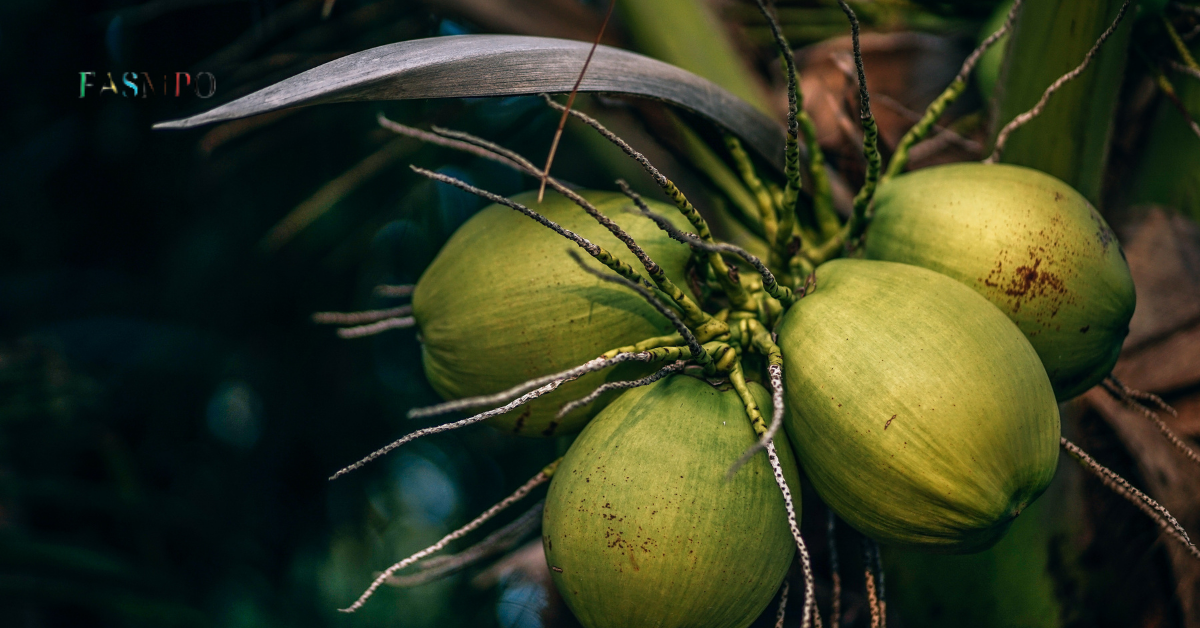
Ben Tre is considered the largest dried coconut growing region in Vietnam, notable for its large area, suitable natural conditions, long-standing farming experience, and processing chain.
When talking about dried coconuts in Vietnam, it's hard to overlook Ben Tre. For a long time, this region has been known as the "land of coconuts," not only because of the image of rows of coconut trees lining the rivers and canals, but also because of the special role of the coconut tree in local life, economy, and culture. On the map of Vietnamese agricultural products, Ben Tre stands out as the most prominent location when discussing large-scale dried coconut cultivation, a stable supply of raw materials, and a diverse processing ecosystem.
Dried coconuts are mature coconuts with thick flesh and high oil content, commonly used as a raw material for many products such as dried shredded coconut, coconut milk, coconut oil, coconut candy, coconut powder, activated charcoal from coconut shells, coconut fiber, and many handicrafts. Unlike fresh coconuts, which are mainly used for refreshment, dried coconuts are closely linked to the processing industry and the raw material supply chain.
So why has Ben Tre become the largest dried coconut growing region in Vietnam? The answer lies not only in its large cultivated area, but also in its natural conditions, farming expertise, the development of traditional crafts, processing businesses, and how local people have transformed coconut cultivation into a comprehensive economic sector.
Ben Tre – the leading coconut-growing region in Vietnam.
Ben Tre is located in the Mekong Delta, an area with a dense network of rivers and canals, fertile alluvial soil, and a tropical monsoon climate favorable for coconut tree growth. For generations, the coconut tree has been present in the lives of the people here, serving both as a livelihood crop and a cultural symbol.
What makes Ben Tre special is not just its extensive coconut cultivation, but the formation of an entire ecosystem centered around the coconut tree. In many other localities, coconuts may only be intercropped or grown on a small scale. In Ben Tre, coconuts have become the main crop, creating jobs for farmers, purchasing centers, craft villages, processing plants, export businesses, and related service industries.
In the minds of Vietnamese consumers, when mentioning quality dried coconut, raw coconut, coconut candy, coconut milk, or other processed coconut products, Ben Tre is almost the first place that comes to mind. This is a huge brand advantage, accumulated over a long period of time, not something that happened overnight.
_20260528124030.png)
What is dried coconut? Why is dried coconut important?
Dried coconuts are mature coconuts whose outer shells have turned brown or gray, and whose flesh is harder, thicker, and richer than that of young coconuts. The water in dried coconuts is usually less sweet than fresh coconuts, but the main value lies in the flesh, shell, and fiber.
In the coconut industry value chain, dried coconuts play a crucial role because almost the entire coconut can be utilized. Coconut flesh is used for oil extraction, coconut milk production, dried coconut flakes, or other food ingredients. Coconut shells can be used to produce activated charcoal, handicrafts, and fuel. Coconut fiber is used for yarn, coconut fiber mats, plant growing substrates, and many agricultural products. Coconut husks can also be recycled in circular economy models.
It is this comprehensive use that makes dried coconuts have a much broader economic value than simply selling fresh coconuts. In a region with a large production volume like Ben Tre, dried coconuts are not only an agricultural product but also a raw material for processing, export, and green production.
Why is Ben Tre suitable for growing dried coconuts?
First of all, Ben Tre has very suitable natural conditions for coconut trees. The area has a hot and humid climate year-round, abundant sunshine, alluvial soil, and a system of rivers and canals that facilitates irrigation. Coconut trees are relatively adaptable to riverside and coastal areas and can withstand harsher conditions than some other fruit trees.
Secondly, the land in many areas of Ben Tre is suitable for the long-standing practice of coconut cultivation. Coconut trees are not the kind of trees that yield immediate results within a few months; they require time for growth, care, and stable harvesting over many years. Therefore, areas with a long tradition of coconut cultivation will have a great advantage in terms of techniques, varieties, experience in pest and disease control, harvesting, and preservation.
Thirdly, the canal system facilitates the transportation of coconuts. Historically, coconuts could be collected and transported by boats and canoes along the rivers and canals to collection points or processing facilities. This is a natural logistical advantage that not all coconut-growing regions possess.
Fourth, the people of Ben Tre have long-standing experience in exploiting the value of coconut trees. From selecting varieties, caring for, harvesting, and sorting coconuts to utilizing by-products, all of these create a sustainable competitive advantage for this growing region.
_20260528124046.png)
Besides its extensive agricultural production, Ben Tre also boasts a strong processing chain.
For an agricultural region to develop sustainably, it cannot rely solely on acreage. More importantly, it needs a stable market outlet, processing businesses, a consumer market, and the ability to enhance product value. This is what sets Ben Tre apart.
In Ben Tre, coconuts are not only sold as raw fruit. Many processed products have become specialties or export goods, such as coconut candy, coconut milk, dried shredded coconut, coconut oil, coconut cream, coconut jelly, activated charcoal, coconut fiber, coconut shell handicrafts, and coconut-based personal care products.
Thanks to advanced processing, the value of coconuts has been significantly increased. Instead of relying solely on fluctuating raw coconut prices, localities can develop various product segments, serving both domestic and export markets. This is an important direction to help the coconut industry reduce risks when agricultural product prices fluctuate.
With dried coconuts, the processing advantages become even more apparent. Mature coconut flesh has a suitable fat content for producing coconut oil, coconut milk, dried coconut flakes, and many other food ingredients. The shell and fiber are also utilized, helping to reduce waste and increase revenue for each stage in the supply chain.
What makes dried coconut from Ben Tre different?
Ben Tre dried coconuts are highly valued due to their abundant raw materials, relatively stable quality, and well-developed procurement, preliminary processing, and processing systems. When a growing area has a large acreage and consistent production, businesses can easily develop production plans, sign supply contracts, and fulfill large-scale orders.
Another advantage is product diversity. Ben Tre dried coconuts are not only used in oil pressing or coconut milk production, but also participate in many other industries. This gives coconuts multiple outlets, from domestic consumption to export.
Furthermore, the "Ben Tre coconut" brand has established a firm position in consumers' minds. With agricultural products, geographical location is crucial. When buyers believe that a region has a long tradition of cultivation, high production volume, and processing expertise, products from that region are more likely to inspire trust.
However, to maintain this advantage, Ben Tre dried coconuts also need to continue meeting increasingly stringent requirements regarding traceability, food safety, farming standards, organic standards, and sustainability in production.
_20260528124058.png)
The role of farmers in the Ben Tre coconut region.
Farmers are the foundation of Ben Tre's coconut industry. They not only plant and harvest the fruit but also maintain farming expertise across generations. Long-term care is crucial for coconut trees. A healthy, high-yielding coconut plantation requires good management of water, nutrients, planting density, pest and disease control, and variety improvement.
In recent years, many coconut-growing areas in Ben Tre have focused more on standardized production, linking with businesses and participating in organic coconut farming models. This trend aligns with market demands, especially as consumers are increasingly concerned about product origin and environmental impact.
When farmers participate in the supply chain, they can receive technical support, access to markets, and standardized production. Conversely, businesses have a more stable supply of raw materials and easier quality control. This linkage is a crucial factor in ensuring that Vietnam's largest dried coconut growing region is strong not only in terms of production volume but also in terms of quality.
_20260528124113.png)
Dried coconut and the circular economy
One of the great advantages of the coconut tree is that almost every part can be used. This provides a very good foundation for developing a circular economy in the coconut industry.
After harvesting the coconut flesh, the shell can be used to make activated charcoal, craft materials, or biofuel. The coconut fiber can be used as a growing medium, fiber yarn, mat, mulch, or agricultural products. Coconut water, coconut flesh, and coconut shell can all become raw materials for various industries if production is organized properly.
For Ben Tre, the circular economy is not just a trend but also a practical necessity. With large coconut production, the amount of by-products is also substantial. If not properly managed, these by-products can become an environmental burden. Conversely, if recycled and processed correctly, they become a source of new value.
This is also why the coconut industry in Ben Tre has many opportunities in the context of a global market that is increasingly interested in green products, sustainable production, and reduced emissions.
Challenges facing Vietnam's largest dried coconut growing region.
Despite its many advantages, the coconut industry in Ben Tre still faces numerous challenges.
The first challenge is climate change and saltwater intrusion. The Mekong Delta as a whole is increasingly affected by extreme weather, droughts, sea level rise, and changes in river flow. Coconut trees are more adaptable than some other crops, but that does not mean they are completely immune to climate risks.
The second challenge is the fluctuation in raw material prices. When coconut prices rise, farmers benefit more, but processing businesses may face cost pressures. When prices fall, coconut growers face difficulties. For sustainable development, the coconut industry needs a better linkage system to share benefits and risks among farmers, traders, processing facilities, and businesses.
The third challenge is the increasingly stringent market standards. For export products, requirements regarding food safety, chemical residue levels, organic certification, traceability, and environmental responsibility are becoming more stringent. This necessitates a shift from traditional production methods to managed, documented production with designated growing areas and clear processes.
The fourth challenge is upgrading brand value. Ben Tre is already famous as the land of coconuts, but for long-term competitiveness, the brand needs to be associated with quality, standards, the story of the growing region, and modern processing capabilities.
Future opportunities for dried coconut in Ben Tre.
Demand for coconut products is increasing in many markets, particularly in the plant-based food, natural, organic, and processed ingredient categories. Coconut milk, coconut oil, dried coconut flakes, coconut flour, and other plant-based alternatives all have significant growth potential.
Ben Tre has a significant advantage due to its existing raw material sources, local brands, and processing enterprise system. If it continues to invest in standardizing cultivation areas, processing technology, traceability, and developing high-value products, Ben Tre dried coconuts can continue to play a leading role in Vietnam's coconut industry.
Besides the export market, the domestic market is also noteworthy. Vietnamese consumers are increasingly interested in clean food, natural products, vegetable oils, plant-based beverages, and environmentally friendly products. This presents an opportunity for businesses to develop more coconut-based product lines for daily consumption.
_20260528124132.png)
Ben Tre leads not only because of its area
When people say Ben Tre is the largest dried coconut growing region in Vietnam, many immediately think of its area. That's true, but not entirely accurate. Ben Tre's real strength lies in the combination of its large growing area, farmers' experience, natural conditions, procurement chain, processing system, local brands, and its ability to develop diverse products.
A large coconut growing area without advanced processing will easily become dependent on raw material prices. Conversely, an area with processing but lacking a stable supply of raw materials will also find it difficult to expand production. Ben Tre possesses both factors: a large raw material area and a developed processing industry. This foundation helps the province maintain its leading position in Vietnam's dried coconut industry.
What should buyers of dried coconuts look for?
For buyers of dried coconuts, especially businesses, processing facilities, or agricultural product trading units, choosing a supplier shouldn't be based solely on price. A good source of dried coconuts needs to have the right maturity, thick flesh, uniform size, low spoilage rate, and stable supply.
In addition, buyers should pay attention to the origin of the growing region, harvesting methods, storage methods, and sorting capabilities of the supplier. For large orders, consistency is just as important as the quality of each batch. Ben Tre has an advantage in this area thanks to its large production volume and long-standing procurement system.
If the product is intended for food processing or export, safety standards, origin documentation, and quality control procedures need to be prioritized. This is also an area where major coconut-producing regions need to continue improving to meet the demands of the modern market.
_20260528124143.png)
Conclude
Ben Tre is considered the largest dried coconut growing region in Vietnam, and this is no coincidence. It's the result of favorable natural conditions, a long-standing farming tradition, large cultivated areas, a developed processing ecosystem, and the "land of coconuts" brand built over generations.
In the future, Ben Tre's advantage will not only lie in its abundant coconut resources, but also in its ability to produce high-quality, traceable coconut products that meet green standards and participate more deeply in the global value chain. Therefore, Ben Tre dried coconut is not just an agricultural product, but also represents the potential of Vietnamese agriculture when combined with sourcing raw materials, deep processing, and sustainable development.
For consumers, businesses, and entities interested in coconut raw materials, Ben Tre remains a top-rated and reliable destination. And for Vietnam's agricultural sector, the story of Ben Tre dried coconuts is a clear example showing that when a growing region has its own identity, scale, and a strong value chain, local agricultural products can absolutely reach far beyond their traditional boundaries.
Contact: