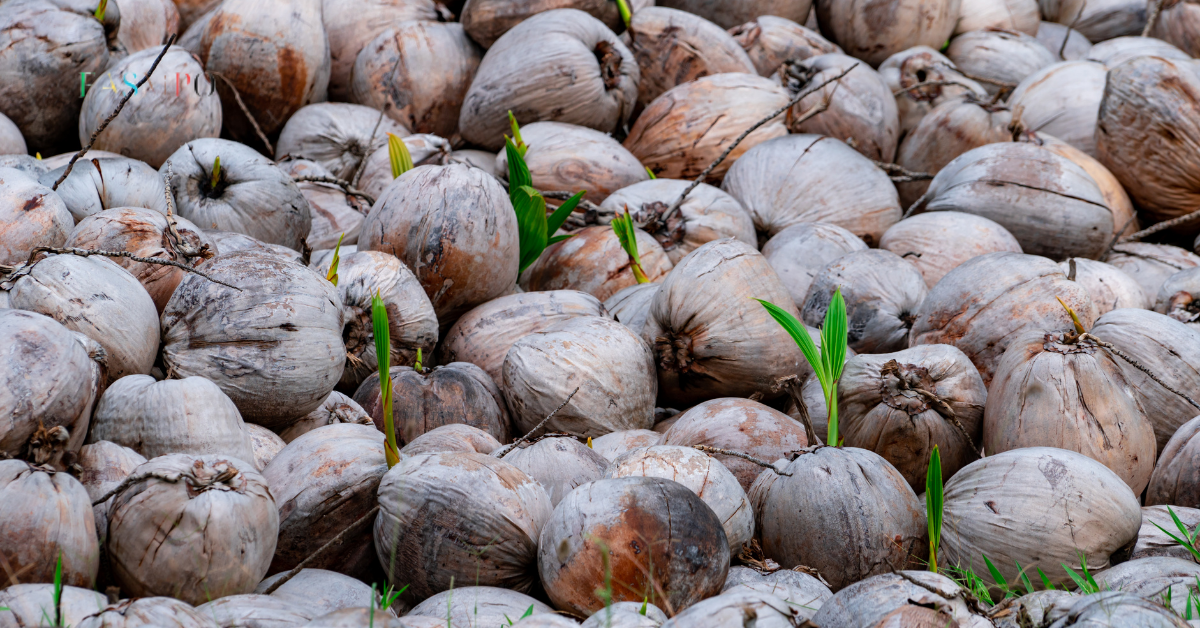
Learn about the process of purchasing dried coconuts in Vietnam for export, from surveying raw material areas, quality control, contract signing, preliminary processing, testing, packaging to..
Vietnamese dried coconut is one of the agricultural product groups with great potential in the international market, especially in the food, confectionery, coconut oil, coconut milk, dried shredded coconut, and processing raw materials industries. With the advantage of tropical raw material areas, stable production, and good quality coconut meat, Vietnam has many opportunities to expand the export of dried coconut to markets such as China, South Korea, Japan, Europe, the Middle East, and the United States.
However, procuring dried coconuts for export cannot be done haphazardly. Businesses need a clear process, from surveying raw material sources, selecting suppliers, quality control, contract signing, preliminary processing, testing, packaging, warehousing, to completing export documentation. A good procurement process not only helps control costs but also reduces the risk of returned goods, quality complaints, or delivery delays.
In this article, Quoc Hung from fasmpo.com will share a practical process for purchasing dried Vietnamese coconuts for export, suitable for trading companies, processing plants, and organizations looking to build a sustainable coconut supply chain.
1. Clearly identify the type of dried coconut to be purchased.
The first step in the procurement process is to identify the correct type of dried coconut required by international customers. In the market, the term "dried coconut" can refer to many different product groups such as whole dried coconuts, dried coconut meat, dried shredded coconut, coconut flakes, coconut chips, dried coconut scraps, or raw materials for oil extraction.
If customers require shredded coconut, businesses must specify the product grade: fine, medium, extra fine, flakes, or chips. If customers need dried coconut meat for oil extraction, criteria will focus heavily on fat content, moisture, aroma, and impurity levels. If customers purchase whole dried coconuts, the size, maturity, weight, degree of breakage, and packaging conditions must be specified.
Incorrectly identifying the type of goods from the outset can lead to incorrect sourcing, incorrect purchase prices, and incorrect inspection standards. Therefore, before purchasing, businesses should have a clear product description, including the product name, intended use, quality standards, packaging specifications, required quantity, and the intended export market.
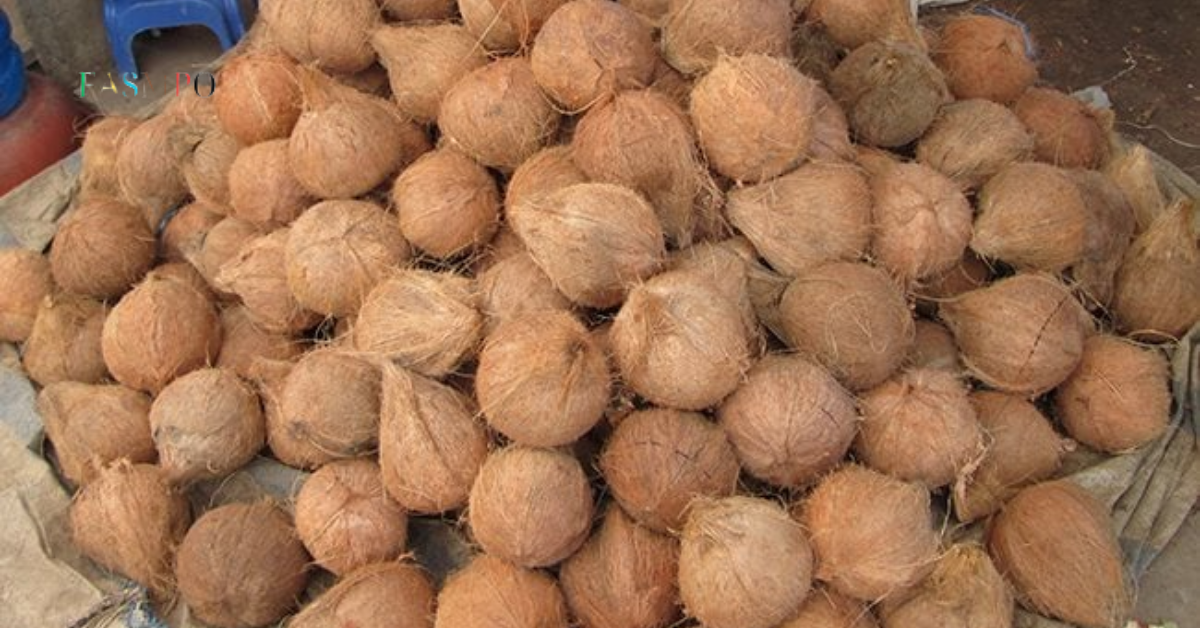
2. Survey of raw material sources
After determining the type of product, businesses need to survey the raw material sources. Vietnam has many coconut-growing regions, with Ben Tre, Tra Vinh, Tien Giang, Vinh Long, and some provinces in the Mekong Delta being major producers. Each region has its own characteristics regarding coconut varieties, seasons, coconut meat quality, purchase prices, and supply capacity.
Surveying raw material sources helps businesses understand actual production levels, periods of abundant supply, seasonal price fluctuations, and local collection capacity. For export goods, a stable supply of raw materials is more important than obtaining cheap prices for a short period.
When conducting surveys, it is necessary to assess the maturity of the coconuts, the thickness of the flesh, the percentage of damaged fruit, the harvesting method, transportation conditions, and local trading practices. If there are long-term export plans, businesses should build relationships with cooperatives, purchasing centers, or suppliers capable of consistently collecting goods.
_20260529074744.png)
3. Choose a supplier or collection point.
Suppliers are a crucial link in the dried coconut procurement chain. A good supplier not only has the product but also the ability to control quality, sort, deliver on time, and cooperate in case of complaints.
When selecting a supplier, businesses should consider factors such as procurement experience, consolidation capacity, warehousing, transportation, sorting capabilities, transaction history, and transparency regarding origin. For dried coconuts used in export processing, priority should be given to suppliers with knowledge of food standards, proper storage methods, and willingness to allow sample testing.
Businesses should not rely entirely on a single source of supply. They should have a list of primary and backup suppliers to avoid being caught off guard by price increases, supply shortages, or substandard quality.
4. Establish procurement standards.
Before beginning a purchasing process, businesses need to establish a specific set of procurement standards. These standards must be easy to understand, easy to verify, and suitable for the requirements of importing customers.
For whole dried coconuts, standards may include maturity, weight, shell condition, degree of cracking, smell, percentage of damaged fruit, and size. For dried coconut flesh, attention should be paid to color, moisture content, fat content, oil smell, impurities, and signs of mold. For dried shredded coconut, control should be exercised over natural whiteness, particle size, texture, moisture content, flavor, percentage of broken pieces, impurities, and microbiological indicators.
Procurement standards should be agreed upon in writing with the supplier. If only verbally agreed upon, it will be very difficult to handle any errors that arise. For export orders, the clearer the standards from the outset, the lower the risk later on.
_20260529074756.png)
5. Sampling and initial quality testing
Sampling is an indispensable step. Businesses should not make purchasing decisions based solely on images or seller promises. Samples need to be taken from multiple bags, locations, or batches to accurately reflect the actual quality.
When testing samples dried coconutTo prepare coconuts, observe the color, smell, taste, and check the dryness, texture, and impurity content. High-quality coconuts are usually natural white or off-white in color, have a mild, creamy aroma, are not sour, moldy, rancid, lumpy, or contain foreign objects.
For export goods, sensory inspection is only the first step. Businesses should send samples to a testing laboratory to check important parameters such as moisture content, oil content, free fatty acids, ash, impurities, and microorganisms if requested by the customer. The test results provide businesses with a basis for negotiation and more accurate purchasing decisions.
6. Negotiate the price and terms of purchase.
The purchase price of dried coconuts depends on the season, yield, quality, specifications, transportation distance, and fluctuations in export demand. Businesses need to compare prices from multiple sources but should not choose a product simply because it is the lowest priced.
A shipment that is cheap but has high moisture content, many impurities, or an unsatisfactory odor can cause far greater losses than the initial savings. Therefore, when negotiating, it is necessary to link the price to specific standards. For example, the price should apply to the goods being sorted, with moisture content within limits, free from mold, odorless, and packaged according to requirements.
Besides price, it's necessary to clearly agree on delivery time, delivery location, weighing method, loss rate, return/exchange conditions, responsibility for substandard goods, and payment method. With new suppliers, it's advisable to purchase a small trial quantity before signing a large contract.
_20260529074810.png)
7. Sign the purchase contract.
A purchase contract is a crucial legal basis for protecting both the buyer and the seller. The contract should clearly state the name of the goods, quality standards, quantity, unit price, total value, delivery schedule, packaging specifications, delivery location, inspection method, payment terms, and how to handle substandard goods.
For export goods, domestic contracts should adhere closely to the requirements of the foreign trade contract. If foreign customers require specific moisture levels, dimensions, certifications, or packaging, these requirements should be included in the procurement contract with the domestic supplier.
Businesses should also clearly define the right to refuse delivery if coconuts are found to be moldy, rancid, contaminated with foreign substances, or not conforming to the approved sample. This helps avoid disputes once the goods have arrived at the warehouse.
8. Organize collection and transportation to the warehouse.
After signing the contract, the business needs to organize the collection and transportation of the dried coconuts to the warehouse or factory. During transportation, the dried coconuts must be carefully protected from rain, moisture, and contact with goods that have strong odors.
If transporting whole dried coconuts, avoid strong impacts that could crack the shell or increase the rate of damage. If transporting dried coconut meat or shredded coconut, the packaging must be airtight, clean, and not placed directly on a dirty or damp vehicle floor.
Upon arrival at the warehouse, the quantity, weight, packaging condition, and sensory quality must be checked before being stored. Goods showing signs of dampness, mold, or unusual odors should be separated for inspection and not mixed with goods that meet standards.
9. Preliminary processing, sorting, and post-harvest handling
Depending on the product type, dried coconuts after harvesting may require preliminary processing, sorting, or further processing. For whole coconuts, businesses can peel the shell, separate the flesh, wash, cut, grate, and dry it. For dried coconut flesh, cleaning, removing damaged parts, controlling moisture content, and sorting by quality are necessary.
For exported dried shredded coconut, the processing procedure must ensure food hygiene. The steps typically include selecting coconut flesh, removing the outer skin, washing, blanching or heat-treating if necessary, shredding or cutting to size, drying, cooling, sieving, metal detection, and packaging.
Each stage of the process affects the final quality. If the drying process is insufficient, the product is prone to dampness and mold. If the drying temperature is too high, the coconuts will turn yellow, burnt, and lose their natural aroma. If the sieving is not done properly, the coconuts will be of uneven size, making them difficult for customers to use.
_20260529074822.png)
10. Testing and quality control of the shipment
Before exporting, businesses need to conduct a final quality check of the shipment. This testing should be based on the requirements of the importing market and agreements with the customer. Common parameters include moisture content, oil content, free fatty acids, particle size, impurities, microorganisms, and heavy metals if necessary.
In addition to laboratory testing, the quality control team needs to perform sensory inspections of each batch: color, smell, taste, texture, packaging condition, and batch code. Substandard goods must be isolated, processed, or discarded. Mixing defective goods with acceptable goods to meet quantity requirements is not advisable, as this carries a high risk of export complaints.
Each shipment should have its own record, including the source of raw materials, production date, inspection results, testing results, batch code, and packaging information. This record is useful for tracing the product when requested by the customer.
11. Packaging and storage pending export
Export packaging needs to be appropriate for the product type and shipping route. Dried shredded coconut is usually packed in multi-layered bags with an inner PE layer to protect against moisture. Some customers require 25 kg bags, 10 kg bags, or palletized packaging depending on the market.
The packing area must be clean, dry, insect-free, and free from foreign objects. After packing, goods should be stored in a cool, well-ventilated place, away from direct sunlight, moisture, and chemicals or goods with strong odors.
For containerized shipments, containers must be inspected before loading: they must be clean, dry, odorless, puncture-free, leak-free, and free of signs of insect infestation. If the shipping route is long or passes through areas with high humidity, businesses should consider using appropriate dehumidifying materials.
12. Prepare export documents
A typical set of export documents for dried coconuts includes a commercial contract, commercial invoice, packing list, bill of lading, customs declaration, certificate of origin (if requested by the customer), phytosanitary certificate (if required by the importing market), inspection certificate or COA, food safety certificate, and other documents depending on the delivery terms.
Businesses need to carefully check the information on the documents: product name, HS code, quantity, weight, container number, seal number, buyer's name, port of departure, port of arrival, and delivery terms. Documentary errors can delay customs clearance or cause additional costs.
For demanding markets, it's advisable to confirm specific documentation requirements with the client or logistics company beforehand. Avoid preparing documents haphazardly, as requirements may vary from market to market.
13. Delivery and post-export tracking
After the goods are packed into containers and all procedures are completed, businesses need to monitor the shipping schedule, bill of lading, delivery status, and customer feedback. If any issues arise, such as delays, schedule changes, missing documents, or requests for additional documentation, they need to be addressed quickly to avoid affecting the buyer.
After customers receive their orders, businesses should proactively seek feedback on quality, packaging, moisture content, odor, and the condition of the goods upon arrival at the port. This feedback is crucial for improving procurement and production processes for future orders.
A professional export business not only sells a shipment but also builds a stable, transparent supply chain capable of maintaining consistent quality across multiple seasons.
Conclude
The process of purchasing dried coconuts from Vietnam for export needs to be well-organized, from product identification, surveying raw material areas, selecting suppliers, sample testing, contract signing, collection, preliminary processing, inspection, packaging, to preparing documentation and delivery.
In agricultural exports, consistent quality is more important than securing low prices in the short term. Standard dried coconuts must have a clear origin and be well-controlled in terms of color, aroma, moisture content, impurities, microorganisms, packaging, and documentation. When businesses establish professional procurement processes, Vietnamese dried coconut products will have a greater chance of competing in the international market.
At fasmpo.com, we believe that the value of Vietnamese agricultural products lies not only in production volume but also in the organization of the supply chain. Proper procurement, proper quality control, and export according to standards are the foundation for the sustainable development of Vietnamese dried coconut.