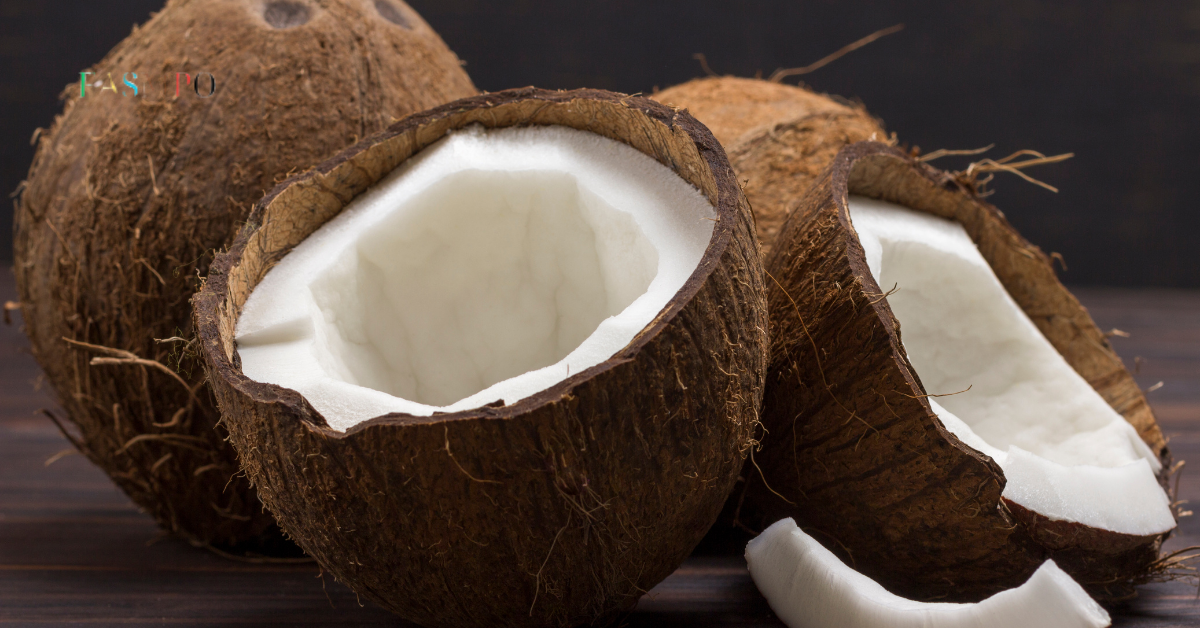
Guide to identifying export-quality dried coconuts based on color, smell, moisture content, size, impurities, technical specifications, packaging, certifications, and traceability...
Dried coconut in Vietnam, dried shredded coconut, in particular, is one of the high-value product groups in the agricultural processing industry. Not only serving the domestic market, dried coconut is also widely used in confectionery, cereals, nut milks, instant foods, ice cream, beverages, granola, and many export products. However, for a dried coconut product to be considered export-standard, buyers cannot simply look at its beautiful white color or fragrant aroma.
A batch of high-quality dried coconut needs to meet several criteria simultaneously: good raw materials, clean processing, appropriate moisture content, natural color, stable flavor, correct oil content, no foreign impurities, standard packaging, and clear certification documentation. For businesses purchasing in large quantities, correctly identifying the quality of dried coconut helps reduce production risks, avoid customer complaints, and protect brand reputation.
In this article, I, Quoc Hung from fasmpo.com, will share how to identify export-standard dried coconuts in a practical, easy-to-understand way that can be applied when checking samples, working with suppliers, or evaluating shipments before signing a contract.
What are the export-standard dried coconuts?
Export-standard dried coconutIt is generally understood to be a product made from the white flesh of mature coconuts, which is then processed, cleaned, cut or grated, dried, sieved by size, and packaged according to the requirements of the importing market. In international trade, this product is often referred to as desiccated coconut.
Unlike ready-to-eat dried coconut which can be sugared, flavored, or roasted until crispy, dried shredded coconut for export, used as a food ingredient, prioritizes naturalness, stability, and safety. The product must retain the characteristic aroma of coconut, have a natural white to pale creamy color, be free from rancid oil odor, mold, impurities, and signs of spoilage.
Depending on customer requirements, exported dried coconut can be divided into various forms such as fine grade, medium grade, extra fine, flakes, chips, shreds, or special cuts. Each form is suitable for a different use. Fine grade is commonly used in confectionery, cake fillings, and nutritional bars. Medium grade is used for baked goods, toppings, and mixed products. Flakes and chips are often used in granola, cereals, yogurt, snacks, or food decoration.
_20260528212641.png)
Why is it important to be able to correctly identify high-quality dried coconuts for export?
In the food industry, the quality of raw materials directly affects the quality of the finished product. If dried coconut is damp, has a rancid oil smell, or contains impurities, the manufacturing business may face significant risks: confectionery may spoil quickly, the taste may be inconsistent, the product may change color, its shelf life may be reduced, or it may even be returned by customers.
For export operations, the risks are even greater because goods have to be transported over long distances, often in containers, and are subject to changes in temperature and humidity. A batch of dried coconut with high moisture content or substandard packaging may clump together, develop strange odors, or deteriorate in quality during transportation.
Therefore, buyers need a clear set of inspection criteria. They shouldn't rely solely on low quotes or attractive sample images. A reliable supplier must be able to provide consistent samples, clear specifications, appropriate certifications, traceable batch codes, and maintain quality across multiple orders.
_20260528212655.png)
1. Identification through color
Color is the first indicator when evaluating dried coconuts. High-quality dried coconuts for export typically have a natural white or light creamy white color. The color should be uniform, without blotches, black spots, green spots, brown streaks, or signs of scorching.
Coconuts that are excessively yellow may be due to poor quality raw materials, high-temperature drying, or prolonged storage. Brown edges on the coconut slices may be due to excessive drying or improper roasting. Coconuts with black, gray, or green spots are usually a sign that requires careful inspection as they may be related to impurities, thin skin, mold, or hygiene issues during production.
However, buyers should also be wary of unusually white products. High-quality dried coconut doesn't necessarily have to be pure white like paper. The natural white color of coconut flesh is usually off-white or slightly creamy. If the product is excessively white, inquire about the processing methods, additives, certifications, and relevant test results.
2. Identification through smell
Good quality dried coconut should have a characteristic, light, creamy, and clean coconut aroma. When the packaging is opened, the coconut smell should be pleasant, not pungent, not too strong, and free from any strange odors.
Odors to avoid include musty, sour, fermented, smoky, burnt, rancid, or chemical smells. Rancid oil is especially important because coconuts have a high natural fat content. Improper storage or prolonged exposure to hot, humid environments can oxidize the fats in coconuts, resulting in an unpleasant odor and reduced quality.
When testing samples, don't just smell them immediately after opening the package. You can take a small amount out onto a clean tray, let it sit for a few minutes, and then smell it again. Some odors will become more pronounced after the product is exposed to air.
_20260528212710.png)
3. Identifying through taste
High-quality dried coconut for export has a mild, creamy taste, a naturally sweet aftertaste, and no bitterness. For the unsweetened variety, the sweetness isn't overly pronounced, but it still retains a characteristic fragrant and creamy flavor. When chewed, the product should not have any sour, burnt, bitter, or unusual gritty texture.
If the coconut has a slightly sour taste, it could be a sign that the raw material has fermented or been improperly preserved. If it tastes bitter, check for oil oxidation, over-drying, or the presence of the inner husk. If it tastes burnt, the product may have been overheated during the drying process.
For manufacturing businesses, coconut should be tested in actual recipes, not just tasted individually. For example, if used in cookies, it needs to be tested after baking. If used in chocolate, its flavor profile needs to be checked. If used in granola, its crispness, aroma, and ability to maintain quality after packaging need to be evaluated.
4. Identifying through moisture content and texture.
Moisture content is one of the most important indicators of dried coconut. A quality product must be dry, loose, non-sticky, and free from large clumps. When gently squeezed with clean hands, the coconut should not feel damp, heavy, unusually sticky, or clump together.
Coconuts have a high moisture content, making them susceptible to mold, clumping, and rapid deterioration during long-distance transportation. This is especially true for containerized exports, where the product's moisture content or the moisture content within the packaging is not properly controlled, increasing the risk of damage during transit.
For finely or medium-dried shredded coconut, a good product usually has a uniform texture and doesn't clump together. For coconut flakes or chips, the coconut pieces should be separate and not stuck together in clumps. If you open the package and see condensation, a musty smell, or many clumps sticking together, you need to check the storage conditions and moisture content.
_20260528212723.png)
5. Identification through particle size and uniformity
Dried coconut for export is typically classified by size. Fine, medium, extra fine, flakes, chips, or shreds all have specific size requirements. Uniform size helps customers easily control the formula, product appearance, and production efficiency.
If the coconut is finely ground but contains too many large pieces, it may not be suitable for smooth cake fillings. If the coconut is medium-grained but contains a lot of fine dust, the finished product may be dry, crumbly, or less aesthetically pleasing. If the flakes or chips are too crumbly, their sensory value will be significantly reduced.
When receiving samples, buyers should spread the coconuts out on a white tray for observation. They should assess the percentage of broken pieces, oversized kernels, undersized kernels, and overall uniformity. If purchasing in large quantities, they should request the supplier to specify the grade, sieve size, and allowable tolerance.
6. Identifying through cleanliness and impurities.
Dried coconuts that meet export standards must be clean and free from foreign contaminants. These contaminants may include pieces of hard shell, coconut fiber, brown husk, dirt, metal fragments, plastic, paper, or foreign objects that may arise during production and packaging.
With the naked eye, buyers can check by taking a random sample, spreading it evenly on a clean white tray, and observing it under good lighting. If they see too many brown spots, black fragments, or foreign objects, they should request an explanation and have the cleaning, screening, metal separation, and foreign object control processes re-examined.
For export goods, foreign object control is a very serious requirement. Many international customers require factories to have magnets, metal detectors, screening systems, and quality control procedures at multiple points in the production line.
_20260528212735.png)
7. Identification through oil content
Oil content is a crucial indicator determining the fattiness, aroma, and usability of dried coconut. Dried shredded coconut can be high-fat or low-fat depending on the production process and customer requirements.
High-fat coconuts typically have a distinctly rich, creamy flavor, making them suitable for confectionery, premium foods, toppings, and products that require preserving the natural coconut flavor. Low-fat coconuts are usually suitable for recipes that require fat control, cost considerations, or specific technical specifications.
Buyers cannot accurately assess the oil content with the naked eye alone. However, they can get a preliminary sense of it through the aroma, the richness when tasted, and the texture of the product. To confirm, they need to rely on the specification sheet or test results from a laboratory.
8. Identification through free fatty acid levels and oil odor.
Free fatty acids are an indicator reflecting the degree of breakdown or degradation of coconut oil. When this indicator is high, the product often develops a rancid odor, a stale oil smell, or an unpleasant aftertaste. This is especially important for dried coconuts with a high oil content.
When working with suppliers, buyers should request information on free fatty acids or total acidity, depending on how it's presented in the technical documentation. For on-site inspection, the rancid smell of the oil is the most easily recognizable warning sign. If the sample already has a rancid oil smell from the start, don't expect the product to improve after shipping.
A good export shipment must retain the fresh, odorless scent of coconut throughout its stated shelf life, provided it is stored properly.
9. Identification through microbiological indicators
Dried coconut is a dried food, but that doesn't mean it's free from microbiological risks. If the raw materials, washing water, equipment, workers, or packaging environment are not properly controlled, the product can still be contaminated with undesirable microorganisms.
For export goods, customers are often interested in indicators such as total aerobic microorganisms, yeasts, molds, Coliforms, E. coli, Salmonella, and other indicators depending on the market. In particular, Salmonella is often a very strictly controlled indicator in many dry food groups.
Buyers cannot visually inspect the microbiology of the product. Therefore, a Certificate of Analysis (COA) is required for each shipment, or periodic test results from a suitable laboratory. If the order is for a demanding market, the microbiological specifications should be agreed upon in the contract beforehand.
_20260528212753.png)
10. Identification through packaging
Packaging for exported dried coconut needs to protect the product from moisture, dust, insects, odors, and impacts during transportation. Common packaging includes multi-layered paper bags with an inner PE layer, an outer PP bag, or other packaging structures as per customer requirements.
A satisfactory package must be clean, dry, undamaged, without punctures or unusual bulges, and properly sealed. The information on the package must be clear, including the product name, net weight, batch code, production date, expiration date, manufacturer's name, country of origin, and storage instructions.
For containerized shipments, additional loading conditions are important. Bags should not be placed directly against the container floor if there is a risk of moisture. Containers must be clean, dry, odorless, leak-proof, and free of signs of insect infestation. For long-distance shipments, buyers and suppliers should agree on appropriate moisture protection measures.
11. Identification through certification documents
Export-standard dried coconuts require not only a high-quality product but also clear documentation. Depending on the market, customers may require certifications such as HACCP, ISO 22000, FSSC 22000, BRCGS, Halal, Kosher, Organic, FDA registration, or other certifications.
Not all markets require all certifications. However, suppliers with good quality management systems will usually proactively provide product documentation, factory certifications, specification sheets, COA, MSDS (if needed), packing lists, invoices, certificates of origin, and other relevant documents.
Buyers should check the validity of the certification, the name of the certifying body, the scope of the certification, and its suitability for the product being purchased. They should not rely solely on logos in catalogs or on websites.
12. Identification through traceability
Traceability is an increasingly important factor in agricultural exports. A quality batch of dried coconuts needs a clear batch code, production date, production shift, or information that helps the factory trace back the product if problems arise.
If a complaint arises regarding odor, color, microorganisms, or impurities, the batch code will help identify the extent of the impact and facilitate faster resolution. A professional supplier must be able to manage raw material records, production records, quality control records, and shipping records.
For buyers, traceability is not just a paperwork requirement, but also a business protection tool. A supplier without a clear batch numbering system will face significant difficulties when problems arise.
13. Check the sample before placing your order.
Before signing a large contract, buyers should request representative samples. Samples should be properly packaged, clearly indicating the grade, production date, specifications, and storage conditions. Upon receiving the samples, check the color, smell, taste, size, texture, crumb percentage, and feel when used in the actual formula.
However, a beautiful sample isn't enough. Buyers should ask clearly: does this sample represent mass production, what are the quality tolerances, when will the goods be produced, will the Certificate of Analysis (COA) be issued per batch or periodically, and will the actual packaging match the sample?
A common mistake is making a purchase decision based solely on a small sample. When goods arrive in large quantities, quality can vary if the supplier lacks a consistent quality control system. Therefore, for the first order, consider pre-shipment inspection, third-party testing, or requesting photos/videos of the packaging if necessary.
14. Common defects found in substandard dried coconuts
Some common defects include yellowed or burnt coconuts, rancid oil smell, moldy smell, sour taste, clumping, dampness, inclusion of husks or fibers, excessive fine dust, uneven size, or leaky packaging.
These defects can stem from various causes: substandard coconut raw materials, poor hygiene, insufficient drying, excessive heat during drying, storage in humid conditions, improper packaging, or excessively long storage times.
For commercial buyers, it is necessary to distinguish between minor defects that are acceptable within tolerances and serious defects that are unacceptable. Musty odors, rancid odors, signs of contamination, foreign matter, and microbiologically substandard results are issues that require serious attention.
15. Quick checklist when buying dried coconuts for export
When evaluating dried coconuts, buyers can use the following checklist:
The product has a natural white to pale creamy color, is not burnt, and has no mold spots. It has a characteristic coconut aroma, is not rancid, sour, smoky, or chemically treated. The taste is mildly creamy, not bitter or burnt. The product is dry, loose, and not abnormally clumped. The size is correct grade, and the percentage of broken pieces is within acceptable limits. There are no foreign impurities, fibers, hard shells, metal, or unusual objects. The packaging is clean, airtight, and has a suitable moisture barrier. The label clearly shows the product name, batch code, weight, production date, expiration date, and origin. The supplier has a specification sheet, COA, and appropriate certifications. The batch is clearly traceable.
Conclude
Identifying export-quality dried coconut cannot rely on a single factor. A satisfactory product requires a harmonious balance of sensory qualities, technical specifications, food safety, packaging, certifications, and the supplier's quality control capabilities.
Good quality dried coconut should have a natural white color, a clean aroma, a characteristic rich flavor, stable dryness, uniform size, be free of impurities and strange odors, and have clear product documentation. For businesses purchasing in large quantities, checking samples, requesting a Certificate of Analysis (COA), reviewing certifications, and agreeing on standards from the outset is the best way to reduce risk.
At fasmpo.com, we believe that Vietnamese agricultural products have many advantages in the international market if they are well controlled from raw materials to processing and trade. Vietnamese dried coconut not only needs to be delicious and visually appealing but also stable, transparent, and meet the specific requirements of each market.