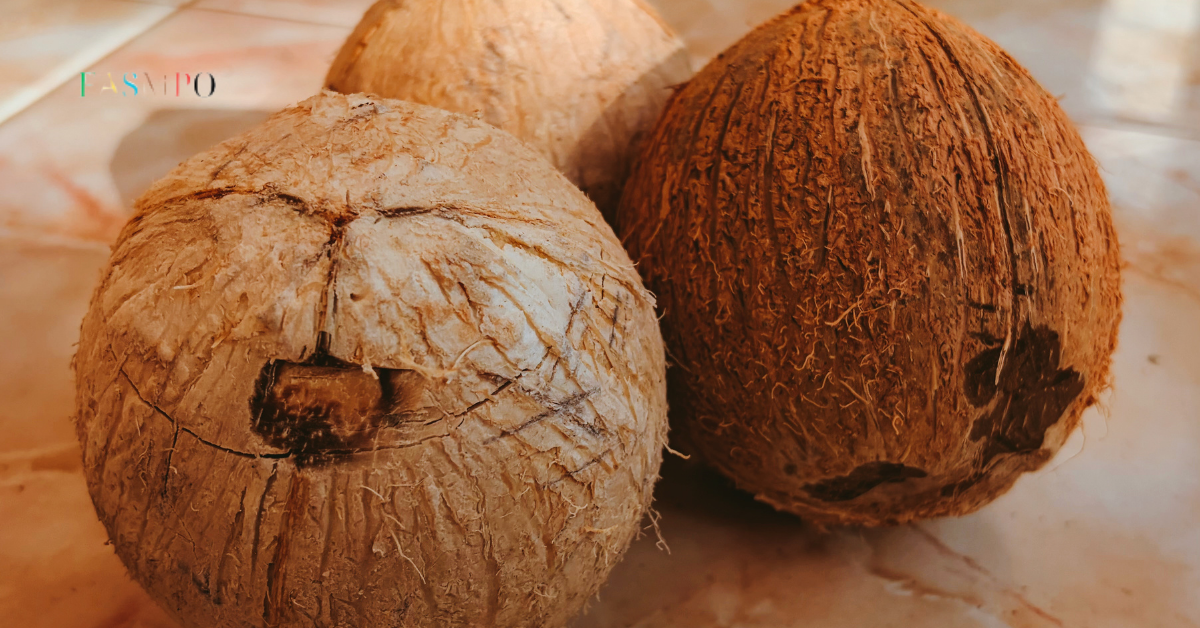
The demand for export-standard dried coconut continues to increase due to trends in deep processing, natural foods, and international trade. FASMPO analyzes the opportunities for businesses.
The demand for export-standard dried coconut continues to increase as Vietnam's coconut industry enters a phase of development focused on deep processing, quality standardization, and expansion into international markets. While previously primarily viewed as a traditional agricultural product, coconuts have now become a crucial raw material for numerous industries, including food, beverages, cosmetics, agriculture, biomaterials, and supporting industries.
In that value chain, dried coconut plays a special role. It is not only a raw material for dried shredded coconut, coconut oil, coconut flour, coconut milk, and many other processed products, but also a highly commercial commodity if it meets export standards. As international demand increases, importers are not only seeking competitively priced supplies, but also demanding consistent quality, clear documentation, traceability, and on-time delivery capabilities.
From FASMPO's perspective, this is the time for Vietnamese businesses to look at the dried coconut market from a longer-term perspective. Opportunities lie not only in selling more products, but also in upgrading standards, building reputation, and participating more deeply in the global supply chain.
Why is there an increase in demand for export-standard dried coconut?
Demand dried coconutThe increase in export standards stems from several factors simultaneously. First, global consumers are increasingly interested in products of natural origin, plant-based ingredients, and foods with fewer additives. Coconut is one of the ingredients that fits this trend because it can be used in many different product lines, from traditional foods to convenience foods, vegetarian products, and products supporting a healthy lifestyle.
Secondly, the food processing industry is expanding its demand for coconut ingredients. Dried coconut, shredded coconut, coconut flour, and coconut oil are used in confectionery, cereals, nutritional bars, ice cream, plant-based milk, beverages, ready-to-eat foods, and many packaged products. As food factories increase production, so does the demand for high-quality ingredients.
Thirdly, importers increasingly prioritize stable supply sources. In international trade, a single shipment meeting quality standards is not enough to establish a long-term relationship. More importantly, businesses must be able to maintain that quality across multiple shipments, seasons, and market conditions. This is why export-standard dried coconuts are receiving more attention than those from unregulated, uncontrolled sources.
Fourth, the trend towards deep processing in Vietnam's coconut industry is creating further momentum for the market. As businesses invest in factories, drying lines, oil pressing, packaging, and testing, the demand for high-quality dried coconut as input becomes more important. The more uniform the raw materials, the easier it is for the final product to meet the requirements of international customers.
_20260528133454.png)
What are the export-standard dried coconuts?
Export-standard dried coconuts should not be simply understood as coconuts that have been harvested and dried. In international trade, export standards typically encompass many factors related to quality, uniformity, safety, storage, packaging, and documentation.
First and foremost is the quality of the raw materials. The coconuts need to be of the appropriate maturity, with thick flesh, good oil content, natural flavor, and free from spoilage. For products used in food processing, the coconut flesh must be strictly controlled to minimize mold, impurities, contamination, and other factors affecting food safety.
Next is uniformity. Export customers generally don't want shipments with significant quality variations between bags, packages, or containers. Uniformity helps processing plants easily control the process, reduce losses, and stabilize the quality of the finished product.
The third factor is the processing and storage procedure. If dried coconut is not stored properly, it can become damp, moldy, develop an unpleasant odor, or lose quality. Therefore, the drying, storage, packaging, and transportation stages must be carefully controlled. Moisture content is one of the most important factors, especially for the raw materials used to produce dried coconut meat or shredded coconut.
The fourth factor is documentation. For international customers, a product's quality is not just about its attractive appearance, but also about the ability to provide technical specifications, test results, quality certificates, certificates of origin, invoices, packing slips, and other relevant documents as required by each market.
_20260528133507.png)
What are international customers looking for?
International customers purchasing export-standard dried coconut are typically interested in three main groups of factors: quality, supply capacity, and supplier reliability.
In terms of quality, they want products that are clean, consistent, meet specifications, and are suitable for their intended use. If buying dried coconuts to process into shredded coconut, they will be concerned about whiteness, fat content, flavor, and the ability to separate the flesh. If buying for oil extraction, they will be concerned about oil content, dryness, and loss rate. If buying for the production of high-end food products, the requirements for food safety and testing will be even stricter.
Regarding supply capacity, customers want to know how many tons a business can deliver per month, whether it can maintain stable production levels, whether it has reserve raw materials, and whether it can handle urgent orders. In many cases, low price is not the deciding factor if the supplier cannot demonstrate its delivery capacity.
In terms of reliability, customers evaluate businesses based on their responsiveness, product profiles, export experience, factory images, quality control capabilities, and transparency in transactions. A business with clear information, professional pricing, and consistent workflows generally has an advantage over one that competes solely on price.
Opportunities for Vietnam in the dried coconut export market.
Vietnam has many advantages for developing a market for export-standard dried coconuts. The first advantage is its long-standing coconut growing region, especially in the Mekong Delta. Localities such as Ben Tre, Tra Vinh, Vinh Long, and Tien Giang have experience in planting, harvesting, processing, and supplying coconuts to both domestic and export markets.
The second advantage is the increasingly sophisticated processing ecosystem. The Vietnamese coconut industry is no longer solely dependent on selling fresh fruit or raw materials. Many businesses have developed products such as dried shredded coconut, coconut oil, coconut milk, coconut powder, coconut cream, activated charcoal from coconut shells, coconut fiber, and coconut peat. As deep processing develops, the demand for dried coconuts meeting quality standards also increases.
The third advantage is access to international markets. Vietnam has numerous free trade agreements, an improving logistics system, and an increasingly professional export business community. This is a crucial foundation for Vietnamese dried coconut products to access demanding markets.
The fourth advantage is the story of sustainable development. Almost every part of the coconut can be utilized: coconut water, coconut flesh, coconut oil, coconut shell, coconut fiber, coconut husk, and coconut dust all have value. This aligns with the circular economy trend and reduces waste in agricultural production.
_20260528133520.png)
Quality standards are key to competitiveness.
As demand increases, the market often becomes more competitive. Businesses that maintain high quality standards are more likely to retain customers in the long term. For export-standard dried coconuts, quality cannot be checked only at the end of the process; it must be managed from the source to the delivery point.
In the raw material sourcing area, it is necessary to control the harvesting time, fruit ripeness, peeling method, transportation conditions, and time to the processing point. If the initial raw materials are not up to standard, the factory will find it difficult to produce a consistent final product.
During the initial processing stage, attention must be paid to hygiene, sorting, removing damaged fruit, controlling impurities, and minimizing cross-contamination. For raw materials used in food processing, hygiene requirements must be even stricter.
In terms of storage, it is necessary to control humidity, temperature, ventilation, packaging, and storage time. Dried coconuts are a product group that is easily affected if the storage environment is unsuitable. A batch of goods that is damp or moldy not only causes financial losses but also directly affects the reputation of the business.
In the export process, it is necessary to prepare clear documentation, pack goods properly, label them appropriately, and coordinate well with logistics units. For demanding markets, businesses should proactively conduct inspections before shipment to reduce the risk of complaints.
Business certifications you should consider
Not all markets require the same type of certification, but businesses looking to expand their dried coconut exports should pay attention to quality management and food safety systems. Certifications such as HACCP, ISO 22000, BRC, Halal, Kosher, or Organic can provide an advantage depending on the customer segment.
In the food market, food safety certifications give consumers more confidence in the production process. In the Muslim market, Halal certification can be a crucial requirement. For high-end consumers, organic certification or sustainability standards can help products gain a better market position.
However, certification should not be viewed as merely a decorative element on a resume. Certification is only valuable when the business actually operates according to that standard every day. If internal processes are unstable, having certification will hardly protect the business from quality risks.
_20260528133533.png)
Value added from deep processing
The increasing demand for export-standard dried coconut not only creates opportunities for selling raw materials but also opens up opportunities for developing value-added products. Instead of just exporting raw dried coconut, businesses can invest in processed product lines such as dried coconut meat, dried shredded coconut, coconut oil, coconut powder, powdered coconut milk, or packaged raw materials according to industrial standards.
Deep processing helps businesses reduce their dependence on fluctuating raw material prices. When a product has a brand, clear specifications, and meets customer needs, its selling price is usually better than that of raw materials.
Furthermore, deep processing helps utilize by-products. Coconut shells can be used to make activated charcoal, coconut fiber as a growing medium, coconut coir for agricultural purposes, and coconut husks can be involved in various material applications. By optimizing the entire coconut, businesses can increase economic efficiency and reduce waste.
_20260528133634.png)
Challenges businesses need to overcome
Despite positive prospects, the export-standard dried coconut market still faces many challenges. The first challenge is the inconsistent quality of raw materials. Differences between growing regions, seasons, harvesting methods, and storage conditions can lead to inconsistent shipment quality.
The second challenge is international competition. Vietnam must compete with countries that have developed coconut industries such as the Philippines, Indonesia, Sri Lanka, and several other tropical countries. These competitors have long-standing experience in exporting coconut products, so Vietnamese businesses need to build a competitive advantage through quality, service, and reliability.
The third challenge is the increasingly high standard requirements. International customers are not only interested in whether a product is aesthetically pleasing, but also in the production process, working conditions, environment, traceability, and social responsibility. This is a trend that businesses need to prepare for early.
The fourth challenge is logistics and cost. Dried coconuts need to be transported, stored, and packaged under the right conditions. If the container is damp, the shipping schedule changes, or the shipping time is extended, the quality of the goods can be affected. Therefore, exporting is not just about production, but also about supply chain management capabilities.
What preparations do businesses need to make to meet increased demand?
To capitalize on the growing demand for export-standard dried coconut, Vietnamese businesses should prepare in a more systematic way.
First and foremost, it's essential to establish a stable raw material supply. Businesses should collaborate with reputable farmers, cooperatives, or purchasing agents to control quality from the outset. Simply purchasing in bulk at specific times will make it difficult to ensure consistency when fulfilling large orders.
Secondly, product specifications need to be standardized. Each type of dried coconut should have clear specifications regarding quality, moisture content, impurities, packaging, packaging weight, storage conditions, and intended use. The clearer the product documentation, the smoother the process of working with customers.
Thirdly, investment in testing and quality management is necessary. Businesses should have procedures in place to inspect raw materials, semi-finished products, and finished products before shipment. Regular testing helps reduce risks and build customer trust.
Fourth, international trade capabilities need to be upgraded. Quotations, contracts, delivery terms, payment, documentation, and customer service must all be professional. In many cases, customers choose a supplier not only because of the price, but also because of the sense of security they feel when cooperating with them.
Fifth, investing in digital content is essential. Websites, catalogs, product images, factory profiles, market analysis articles, and clear contact information are crucial elements in the process of international customers evaluating suppliers. At FASMPO, we believe that digital content is no longer a secondary part of export activities, but an integral part of building trust.
The role of branding in dried coconut exports
In the raw materials market, many businesses often think that brand is less important than price. However, when customers buy internationally, brand is a sign of trust. A brand with transparent information, clear commitments, and a good delivery history will have an advantage in negotiations and customer retention.
Branding in the dried coconut industry doesn't necessarily have to start with big campaigns. It can begin with very basic things: products that live up to promises, quick customer responses, a clear profile, authentic images, transparent quality control processes, and responsible complaint handling.
If done well, Vietnamese businesses can shift from being ordinary raw material suppliers to strategic partners in the supply chains of international customers. This is a crucial step to increase export value.
Future prospects
The demand for export-standard dried coconut is projected to have significant growth potential thanks to the consumer trend towards natural products, the development of the processed food industry, and global demand for plant-based raw materials. However, growth will not be evenly distributed among all businesses. Those with high standards, stable supply sources, and professional delivery capabilities will have greater opportunities.
In the coming period, the market will continue to differentiate. Substandard goods may still be sold through some low-price channels, but it will be difficult to build long-term relationships. Conversely, standard goods with clear documentation and produced under good quality control processes will have a greater chance of reaching higher-quality customers.
This is an opportunity for Vietnam's coconut industry to upgrade its position. The goal is not just to export more, but more importantly, to export at a higher, more stable, and more sustainable value.
_20260528133653.png)
Conclude
The continued increase in demand for export-standard dried coconut is a positive sign for Vietnam's coconut industry. This growth stems from global consumer trends, the need for further processing, the expansion of export markets, and the increasingly high demands for raw material quality.
However, opportunities always come with new demands. Businesses wishing to capitalize on this trend need to invest in raw material sourcing, quality control processes, certifications, logistics, product documentation, and international trade capabilities. In the export market, reputation is not built on promises, but on each shipment meeting standards and each delivery being made on time.
From FASMPO's perspective, Vietnamese dried coconut has great potential if developed professionally, transparently, and sustainably. When businesses combine the advantages of raw materials with deep processing, export standards, and a trustworthy brand, Vietnamese dried coconut can certainly expand its position in the international market in the coming years.