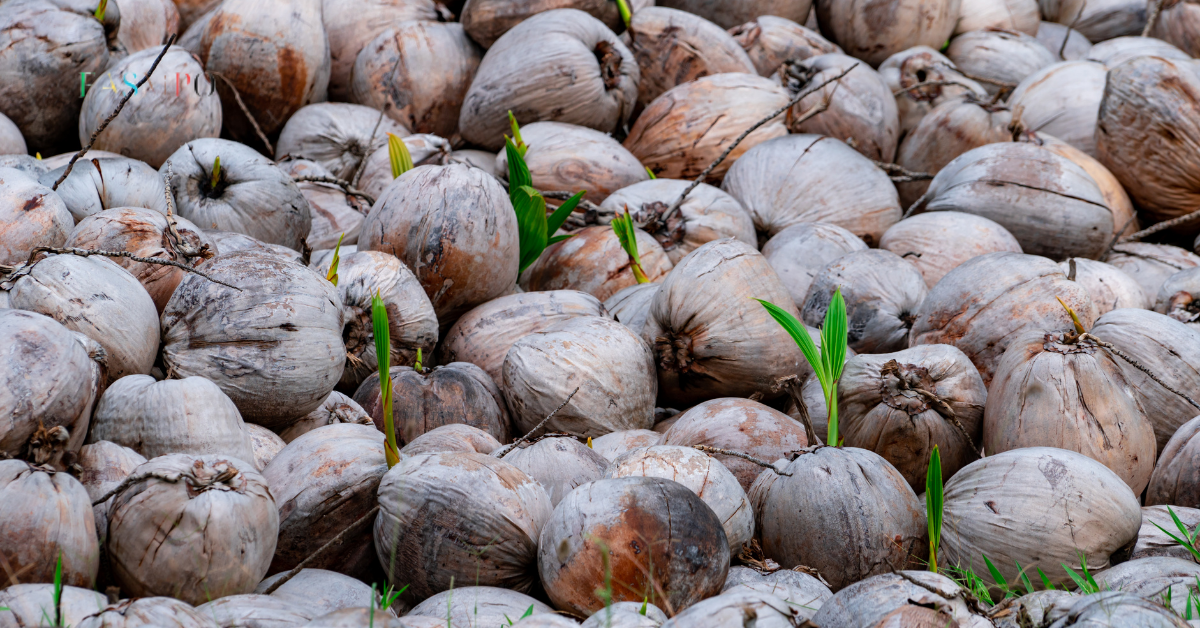
This guide shows you how to properly store Vietnamese dried coconuts, preventing mold, loss of aroma, oil leakage, and preserving their natural richness and flavor for a long time.
Dried coconut is one of the important product groups in the coconut industry value chain. From mature coconuts, dried coconut meat, and shredded coconut to deeply processed products such as coconut flour, coconut oil, coconut milk, and coconut shell charcoal, the dried coconut market is playing an increasingly significant role in international agricultural trade.
For many years, the global supply of coconuts has been attributed to major countries such as Indonesia, the Philippines, India, Sri Lanka, and several other tropical nations. While Vietnam is not the world's largest coconut producer, it is emerging as a prominent example thanks to the quality of its raw materials, favorable geographical location, increasingly improved processing capabilities, and its ability to cater to various market segments.
From Fasmpo's perspective, when comparing Vietnamese dried coconut with international suppliers, one shouldn't only look at production volume. More importantly, consistent quality, delivery capacity, processing level, food safety standards, order flexibility, and origin story are crucial. These factors give Vietnamese dried coconut a competitive edge in a context where international buyers are increasingly concerned about origin, safety, and added value.
What is Vietnamese dried coconut in international trade?
In commerce, "dried coconut" can refer to various product forms. These could include whole dried coconuts, dried coconut flesh used for oil extraction, dried shredded coconut used in confectionery, dried coconut slices, dried coconut shreds, or other processed coconut products.
For international buyers, product groups that are often of interest include unsweetened shredded coconut, finely ground dried coconut, shredded dried coconut, copra, coconut oil, coconut powder, coconut milk, and coconut cream. Each product has different technical standards regarding moisture content, oil content, color, particle size, flavor, microbiological indicators, and packaging.
Vietnamese dried coconuts typically have the advantage of natural flavor, good fat content, and raw materials sourced from traditional growing regions in the Mekong Delta. Ben Tre is the most well-known for its coconut industry, alongside areas such as Tra Vinh, Tien Giang, Vinh Long, and several neighboring provinces.
_20260528105709.png)
Overview of the international supply of dried coconut
International coconut supply is currently concentrated mainly in the Asia-Pacific region. Indonesia has a very large area and production of coconuts, playing a crucial role in the supply of raw materials and processed products. The Philippines has a long-established coconut industry, particularly strong in coconut oil, desiccated coconut, and large-scale export products. India has high production but largely serves its large domestic market. Sri Lanka is renowned for its desiccated coconut, organic coconuts, and value-added products.
Compared to these countries, Vietnam has a smaller production scale but a remarkable growth rate. Vietnam's advantage lies not in competing on absolute quantity, but in its ability to supply flexible products suitable for many segments, from raw materials to final consumer products.
In the context of increasingly diversified global supply chains, international buyers do not want to be entirely dependent on one or two large countries. This opens up opportunities for Vietnam to become a reliable supplementary source of supply, especially for customers requiring stability, quality control, and flexible trade communication.
Comparison of raw material sources
The source of raw materials is the first foundation that determines the quality of dried coconut. Vietnam has the advantage of a tropical climate, a river system, and soil suitable for coconut trees. The Mekong Delta region, especially Ben Tre, has a long tradition of coconut cultivation and has formed a fairly distinct ecosystem for production, procurement, preliminary processing, and processing.
Indonesia and the Philippines have much larger raw material areas, giving them an advantage in terms of large production volume. However, large scale also comes with challenges regarding quality consistency, dispersed cultivation areas, and supply chain management costs. India has high production volume, but strong domestic demand means that exports are not always a top priority. Sri Lanka has an advantage in quality and brand recognition in some high-end product lines, but the scale of supply may be more limited compared to larger countries.
Vietnamese dried coconut has the advantage of concentrated raw material sourcing areas. When businesses build a good procurement network, they can more effectively control the age of the coconuts, harvesting time, processing methods, and input quality. This is a crucial factor for products such as dried shredded coconut, dried coconut slices, or ingredients used in food.
_20260528105723.png)
Comparison of sensory quality
The sensory quality of dried coconut is usually assessed by its color, aroma, fat content, dryness, texture, and cleanliness. Good quality dried coconut typically has a natural color, is not dull, has no rancid oil smell, is not moldy, is free of impurities, and retains the characteristic rich flavor of coconut flesh.
Vietnamese dried coconut is highly valued by many customers for its delicate aroma, natural creamy taste, and versatile applications in processing. For products used in confectionery, beverages, desserts, or vegetarian food, the natural flavor is a significant advantage.
Suppliers from the Philippines and Sri Lanka typically have long-standing experience in producing desiccated coconut to international standards. Large factories in these countries are accustomed to the stringent requirements of the European, American, Japanese, and Middle Eastern markets. Indonesia, on the other hand, has the advantage of abundant raw materials, suitable for both industrial and deep-processed products.
Therefore, when comparing quality, Vietnam should not compete solely by claiming "tastier" or "better." The correct approach is to emphasize the balance between flavor, the freshness of the raw materials, improving processing capabilities, and the ability to meet the specific requirements of each customer.
Comparison of processing capacity
Processing capacity is a major differentiating factor between different suppliers. A country may have abundant coconuts, but if it only exports them raw, the added value will be low. Conversely, with a good processing system, coconut products can be used in many industries such as food, cosmetics, beverages, confectionery, vegan food, and industrial raw materials.
The Philippines and Indonesia have a distinct advantage in terms of experience in industrializing the coconut industry. These two countries have many long-established businesses in coconut oil, desiccated coconut, coconut milk, coconut cream, and other products exported in large quantities. Sri Lanka, while smaller in scale, has a strong reputation in the high-quality processed product group, including organic products.
Vietnam is in a period of rapid development. Many businesses have invested in drying, packaging, hygiene processing, moisture control, and food safety standards. Besides traditional dried coconut, products such as dried coconut, dried shredded coconut, coconut powder, coconut milk, coconut shell charcoal, and convenient coconut products are expanding.
Vietnam's strength lies in its ability to adapt quickly to market demands. Vietnamese businesses are often flexible in packaging specifications, order sizes, private labels, packaging requirements, and product development tailored to target markets. This is a significant advantage for small and medium-sized enterprises, regional distributors, or food brands seeking new suppliers.
_20260528105734.png)
Comparison of price and competitiveness
The price of dried coconuts depends on many factors: seasonal yield, raw material costs, labor costs, energy, transportation, exchange rates, quality standards, and demand from major markets. No single country is always the cheapest or most stable.
Indonesia often has economies of scale, allowing it to compete effectively in certain high-volume product lines. The Philippines has a long-established export system, but prices can fluctuate depending on raw material availability and demand for coconut oil. Sri Lanka typically competes not primarily on low prices, but on quality, standards, and a higher market segment. Vietnam is in a relatively flexible position: it can compete in the affordable price range while simultaneously developing value-added products.
For international buyers, price should not be the sole criterion. A cheap but inconsistent supply in terms of quality, delayed delivery, or high moisture risk can result in losses far exceeding initial savings. Vietnamese dried coconuts have a competitive advantage if they can demonstrate three key factors: consistent quality, on-time delivery, and clear commercial services.
_20260528105753.png)
Comparison of food safety standards
The international market is increasingly concerned about food safety standards. For dried coconut, the indicators that are often scrutinized include moisture content, microorganisms, mold, impurities, chemical residues, allergens, food-contact packaging, and storage conditions.
Major suppliers such as the Philippines, Indonesia, and Sri Lanka have years of experience meeting international standards. However, this does not mean that all suppliers in these countries are the same. Actual quality varies from factory to factory, process to process, and batch to batch.
To enhance its position, Vietnam needs to continue investing in traceability, standardized growing areas, certified factories, and pre-export quality control systems. For customers in the US, EU, Japan, South Korea, or the Middle East, certifications and quality documentation are not just added bonuses but almost mandatory requirements.
This direction also aligns with the sustainable development strategy of Vietnamese dried coconut. When businesses not only sell products but also sell peace of mind, their brand value will be higher.
Comparison of logistics and geographical location
Vietnam enjoys a favorable location in Southeast Asia, close to important shipping routes and major consumer markets such as China, South Korea, Japan, and ASEAN. For Asian customers, this proximity can help shorten shipping times and optimize costs.
Indonesia and the Philippines are island nations with maritime advantages but also face unique challenges in cargo consolidation, domestic transportation, and reliance on seaports. India has a large domestic market and extensive logistics system, but its distance to some East Asian markets may be greater than that of Vietnam. Sri Lanka has a strategic location on international shipping routes, but its supply scale is not as large as that of leading countries.
For dried coconuts, logistics is more than just transportation costs. It's crucial to keep the product dry, clean, odorless, moisture-free, and free from quality degradation during transit. Therefore, packaging, containers, shipping time, and storage conditions all directly impact quality upon arrival at the buyer.
_20260528105810.png)
Comparison of supply stability
Supply stability is a major issue in the coconut industry. Coconut trees are affected by weather, saltwater intrusion, pests and diseases, climate change, and fluctuations in purchase prices. When market demand increases rapidly, domestic raw materials may face competition from both fresh coconut exports and processed coconuts.
Vietnam has great opportunities but also faces challenges. As fresh coconut exports increase sharply, dried coconut processing plants may face pressure on raw material prices. This requires businesses to have long-term procurement strategies, establish linkages with growing regions, and optimize production plans.
Indonesia and the Philippines also face similar issues, particularly regarding coconut tree age, plantation productivity, and replanting needs. Sri Lanka may be stable in some high-quality segments, but the supply is not excessively large. Therefore, international buyers often tend to build multiple parallel supply sources to mitigate risk.
For Vietnam, if sustainable raw material sources and long-term relationships with farmers can be established, Vietnamese dried coconuts could become a more reliable choice in the eyes of international customers.
The unique advantages of Vietnamese dried coconut
Vietnamese dried coconut has several notable advantages. Firstly, the raw material has a good flavor, suitable for many food products. Secondly, its geographical location is favorable for export to Asia. Thirdly, the coconut processing industry is developing rapidly, with the potential to expand into many value-added product lines. Fourthly, Vietnamese businesses are generally flexible in trade and easily adapt to the specific requirements of customers.
Furthermore, the image of Vietnamese agricultural products in the international market is improving. With Vietnamese coffee, cashews, pepper, tropical fruits, and many processed products now available in numerous markets, the coconut industry also has the opportunity to benefit from this trend.
However, to capitalize on its advantages, Vietnamese dried coconut needs to avoid competing solely on price. Low prices may help access the market initially, but they are not enough to build a long-term brand. What is essential is consistent quality, a clear story about the source of raw materials, appropriate certifications, and professional export services.
Challenges for Vietnamese dried coconut compared to the international market.
Despite its advantages, Vietnamese dried coconut still faces some challenges. Production volume is not as large as in Indonesia, the Philippines, or India. Some businesses are limited in terms of international branding, certifications, B2B marketing, and the ability to sell directly to major importers.
Furthermore, competition for raw materials between fresh coconut exports and dried coconut processing can cause price fluctuations. Without long-term contracts with growing regions, processing businesses are at risk when raw material prices rise rapidly.
Another challenge is standardization. International buyers need consistent product quality across shipments. If the first batch is of good quality but subsequent batches are inconsistent in moisture, color, or flavor, trust will erode. Therefore, quality control needs to be considered vital.
Opportunities for Vietnamese dried coconut in the global supply chain.
Demand for coconut products is increasing due to trends in natural foods, vegan foods, gluten-free ingredients, plant-based beverages, and natural cosmetics. Dried coconut is not only a traditional ingredient but also a component in many modern products.
Vietnam can capitalize on this opportunity by developing product lines tailored to each market. For the Asian market, focus could be placed on dried coconut, coconut milk, dehydrated coconut, and processed coconut ingredients. For the European and American markets, attention should be paid to food safety standards, organic products, sugar-free products, products with minimal additives, and sustainable packaging. For the Middle East, Halal certification could be crucial.
Instead of just selling raw materials, Vietnamese businesses should increase the proportion of deeply processed products. The same coconut can significantly increase in value if processed into dried shredded coconut, coconut flour, coconut oil, coconut milk, activated charcoal, or branded consumer products.
Which supplier should international buyers choose?
There is no single answer for every customer. If buyers need very large quantities and competitive pricing, Indonesia or the Philippines may be worthwhile options. If they need a long-established, high-end brand of dried shredded coconut, Sri Lanka is a strong supplier. If serving the South Asian domestic market or needing to connect with a large production ecosystem, India has its own role to play.
Vietnamese dried coconut is suitable for customers seeking a flexible, high-quality supply source with fast communication, diverse specifications, and potential for long-term cooperation. Vietnam is also a noteworthy option for businesses looking to diversify their supply sources beyond traditional countries.
Most importantly, buyers need to evaluate the specific supplier, not just the country. A good supplier should have a clear product profile, consistent product samples, quality control processes, appropriate certifications, delivery capabilities, and transparent problem-solving abilities.
Conclude
Comparing Vietnamese dried coconut with international suppliers reveals that while Vietnam isn't the largest coconut producer, it possesses notable advantages in terms of flavor, geographical location, versatility, and potential for further processing. While Indonesia, the Philippines, India, and Sri Lanka each have their own strengths in scale, experience, or premium segments, Vietnam is gradually asserting its role as a dynamic supplier within the global coconut value chain.
To compete sustainably, Vietnamese dried coconut needs to focus on consistent quality, clear traceability, meeting international standards, and building a strong brand. This path will not only ensure seasonal sales but also build long-term trust with international customers.
At Fasmpo, we believe that Vietnamese dried coconut has great potential if developed properly. When raw material areas, processing plants, and trading operations are all upgraded, Vietnamese coconut products can compete better in the international market, not only in terms of price, but also in terms of quality, reliability, and the true value of Vietnamese agricultural products.
Contact: