
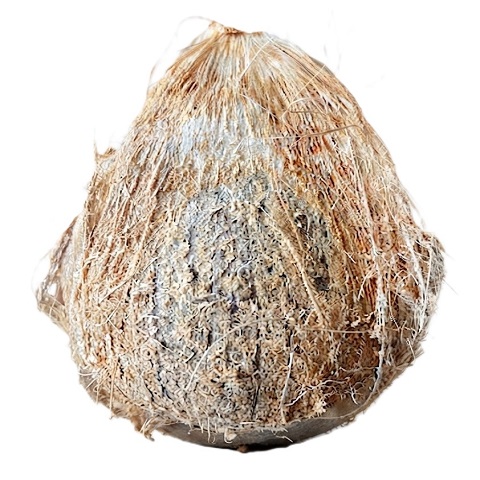
Compare whole dried coconut with processed ingredients to match your production line, packing, and volume needs.
Choosing a Dried Coconut Product for Food Manufacturing: Start with the Product Form
Vietnam's Mekong Delta, particularly Ben Tre province, yields mature coconuts renowned for thick, dense endosperm and rich lipid profiles. For industrial food processors, confectioners, and edible oil millers, successfully sourcing dried coconut begins not with pricing, but with selecting the correct raw material format for your factory’s intake infrastructure.
Define Your Facility’s Processing Capabilities First
Industrial food manufacturers often evaluate coconut ingredients purely on nutritional specifications. However, raw material handling, intake sanitation, and mechanical prep lines dictate whether whole raw fruit or semi-processed coconut represents the most cost-effective procurement choice.
Fully Husked Mature Coconuts: For Plants with Husking, Deshelling, or Pressing Lines
Fully husked mature dried coconuts arrive with the outer fibrous husk removed and the shell cleaned, retaining the hard protective inner shell. This raw agricultural form suits operations equipped with automated or semi-automated deshelling, paring, washing, and mechanical extraction machinery. Plants producing coconut milk, crude or refined coconut oil, and bulk copra cake benefit from importing whole mature fruit because the intact shell provides natural physical protection, helping to reduce direct exposure of the kernel to ambient air and mechanical damage during maritime transit.
Processed Forms (Desiccated Coconut): For Direct Mixing, Baking, and Confectionery
Conversely, facilities manufacturing bakery mixes, snack bars, cereal clusters, or confectionery toppings generally operate cleanroom blending lines without primary milling equipment. Introducing whole fruit into these environments creates cross-contamination hazards and disposal burdens from shells and residual coir fibers. For direct batch blending, procurement teams source ready-to-use desiccated coconut (graded by particle size such as fine, medium, or flakes) that has already undergone peeling, washing, mechanical shredding, and controlled hot-air dehydration.
| Parameter | Whole Mature Dried Coconut (Fully Husked Fruit) | Desiccated Coconut (Processed Ingredient) |
|---|---|---|
| Factory Intake Requirement | Deshelling, paring, slicing, and washing lines | Direct dispensing, batch weighing, and dry blending |
| Storage Characteristics | Requires well-ventilated dry storage to avoid humidity spikes | Sealed food-grade multi-wall bags with inner PE liners |
| Primary Application | Oil crushing, milk pressing, industrial processing | Bakery, confectionery, snack bars, dairy alternatives |
| Transit Stability | Protected by hard natural shell against mechanical impact during handling | Shelf-stable dry ingredient protected by barrier packaging |

Key Food Manufacturing Applications and Raw Material Matching
Selecting the optimal product form ensures high ingredient recovery rates, consistent batch flavor, and predictable processing costs across commercial manufacturing runs.
Industrial Oil Extraction and Fat Fractionation
For industrial edible oil millers and specialty lipid fractionators, sourcing high-yield mature coconuts is critical. Fully aged nuts from the Mekong Delta feature thick, dense solid endosperm (coconut meat) with reference fat content ranging between 65% and 70% on a dry-basis analysis. Crushing dried mature copra (extracted from aged coconuts) in commercial screw expellers yields crude industrial coconut oil while generating a high-fiber copra cake byproduct widely utilized in animal feed compounding.
Buyers evaluating whole coconut options can review available crop grading in our Vietnam export dried coconut overview to determine compatible size grades and shell conditions.
Bakery, Confectionery, and Dairy-Alternative Ingredients
In sweet baked goods, frozen desserts, and plant-based beverage bases, mouthfeel and dispersion uniformity depend heavily on calibrated particle sizes. Desiccated coconut provides standardized fat options aligned with Codex Standard CXS 177: standard desiccated coconut (containing not less than 60% m/m total oil content, commercially termed high-fat) provides rich mouthfeel in coconut macaroons and chocolate fillings, whereas desiccated coconut from which part of the oil has been extracted (containing between 35% and less than 60% m/m oil content, commercially termed reduced-fat) offers structural bulk without excess oil release. For a deeper breakdown of nutritional profiles and processing yields, explore our guide on the practical applications of Vietnamese dried coconut across food formulations.
Technical Parameters to Specify Before Requesting a Quote
Commercial quotation accuracy depends on defining precise physical tolerances in your initial Request for Quotation (RFQ). Imprecise inquiries often result in mismatched grades or pricing revisions after sampling.
Moisture Control, Oil Content, and Particle Size
- Moisture Thresholds: For whole dried coconuts, mature fruit is handled to maintain an internal meat moisture reference level typically below 13% to help minimize the risk of mold formation during extended sea transit. For desiccated ingredients, moisture is strictly held to a maximum of 4.0% m/m in compliance with Codex Standard CXS 177 to suppress water activity (aw) and preserve product stability.
- Natural Lipid Content: Specify required total oil content based on recipe needs, indicating whether your process requires standard cuts (≥60% oil) or partially oil-extracted grades (35% to <60% oil, commercially referenced as reduced-fat) to avoid excess oil weeping.
- Granulometry: If purchasing processed coconut, indicate required mesh sizes (e.g., extra fine, fine, medium, or broad flakes) to ensure seamless performance in depositors and industrial mixing tanks.
Impurity Limits and Shelf-Life Expectations
Commercial purity standards require rigorous physical screening. Quality suppliers utilize multi-stage sorting, including vibrating screens, rare-earth magnets, and optical inspection to eliminate foreign matter such as shell fragments, residual husk fibers, or discoloration. Rather than accepting vague promises of zero impurities, industrial buyers should request established defect thresholds per metric ton along with guaranteed minimum shelf-life parameters under stated storage conditions.
Packaging, Handling, and Container Logistics
Raw agricultural goods and processed coconut ingredients demand distinct packaging methods to ensure product integrity throughout international maritime transport.
PP, Jute, or Mesh Bag Options for Bulk Handling
For whole mature coconuts, breathable packaging is essential. Open-weave mesh bags (frequently packed at 25–30 kg per bag in standard commercial practice) help facilitate air circulation around the fruit to dissipate field heat and ambient humidity. For specialized warehouse storage where darkness is preferred, loose-weave jute sacks or perforated woven polypropylene (PP) bags offer mechanical durability while maintaining necessary gas exchange.
Palletization, Moisture Protection, and Supply Capacity
Ocean freight conditions across tropical routes introduce significant humidity shifts. Depending on the shipping route, seasonal weather, and transit duration, container desiccants (such as calcium chloride or silica gel bags) and heavy kraft paper lining may be utilized to help manage condensation risks (container sweat). Where wooden pallets or wood packaging materials within the scope of ISPM 15 are utilized, ensure they undergo required heat treatment or fumigation to comply with destination phytosanitary regulations. Supporting these bulk logistics requirements, our processing operations coordinate regular monthly container shipments aligned with harvest availability and buyer processing schedules, providing dependable volume for continuous industrial manufacturing runs.
Frequently Asked Questions (FAQ)
- Can whole dried coconuts replace desiccated coconut directly in commercial baking?
- No. Whole dried coconuts require industrial deshelling, paring, washing, and grinding equipment. Food factories without primary processing infrastructure should purchase ready-to-use desiccated coconut.
- What minimum specifications should a commercial coconut RFQ include?
- Your inquiry should state product form (fully husked mature fruit or desiccated cut), target volume, preferred packaging format, destination seaport, and required commercial delivery terms (FOB or CIF).
- What packaging formats are commonly used for bulk shipping whole dried coconuts?
- Breathable mesh bags (25–30 kg) or ventilated woven sacks loaded on pallets represent practical and widely adopted export packaging options to facilitate air circulation during transit.
Request Product Information and Export Quotation
FASMPO connects commercial food manufacturers and commodity importers with premium agricultural products sourced from selected mature coconut groves in Vietnam. Contact our international export desk to request product information, discuss custom packaging options, order a test sample, or receive a formal FOB/CIF quotation. Please specify your target delivery port, anticipated container volume, and intended application to help our team prepare an accurate proposal.