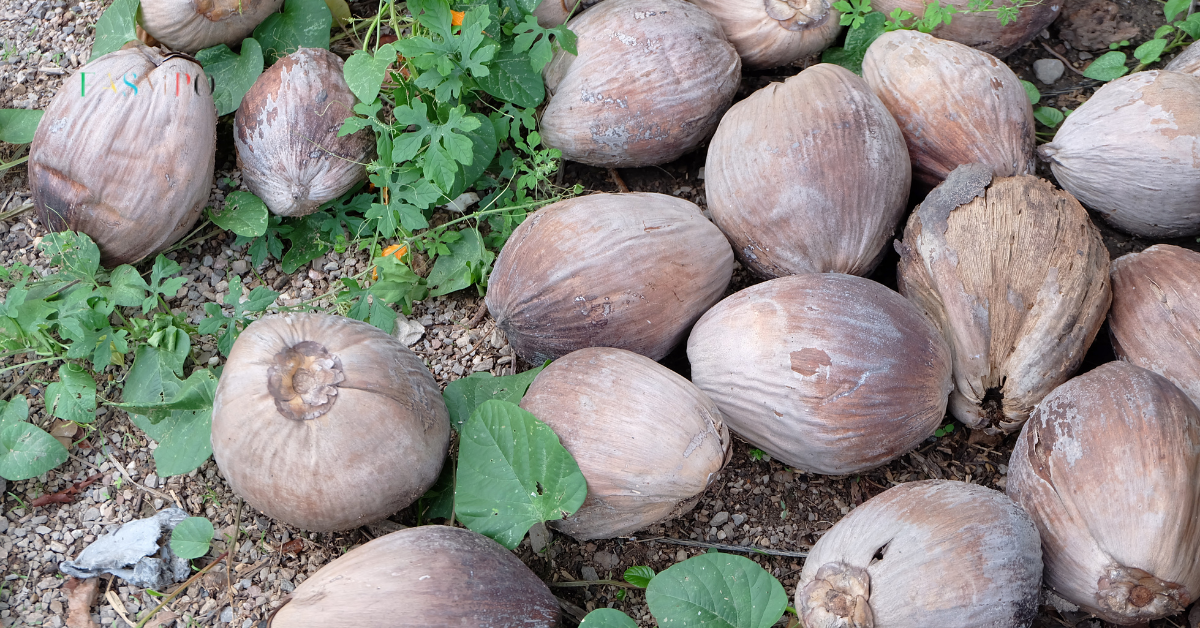
The favorable price of dried coconuts is opening up growth opportunities for Vietnamese businesses thanks to export demand, deep processing, plant-based foods, and agricultural supply chains.
Dried coconut is one of the high-value processed products in Vietnam's coconut industry chain. From mature coconut flesh, businesses can create many product lines such as dried shredded coconut, shredded coconut, sliced coconut, coconut chips, coconut powder, baking ingredients, coconut snacks, and ingredients for plant-based foods. As global demand for natural, convenient, and plant-based foods increases, Vietnamese dried coconut has more and more opportunities to participate more deeply in the international market.
In this context, "good price for dried coconut" should not be simply understood as cheap. For businesses, a good price is a balance between cost, quality, stable supply, and a reasonable profit margin. A product with a competitive price that still meets export standards will help businesses expand their market, retain customers, increase production, and enhance the value of Vietnamese agricultural products.
A good price doesn't necessarily mean the lowest price.
In the agricultural trade, many new businesses often think that to sell their products, they must offer the lowest price. This approach may generate short-term orders but is not sustainable. If prices are too low, businesses are likely to cut back on the quality of raw materials, packaging, testing, or storage processes. This increases the risk of complaints, returns, and damage to reputation.
A good price must be competitive yet accurately reflect product quality. For export-standard dried coconuts, the selling price needs to include the cost of raw materials, processing, drying, sorting, packaging, testing, certification, warehousing, logistics, and risk management. Ignoring these factors, a business might sell its products but won't make a real profit.
For international buyers, a good price isn't just about low prices. They need a stable supply of goods that meet specifications, on-time delivery, and a clear quality record. Therefore, Vietnamese businesses aiming for growth need to build a competitive advantage of "good price coupled with good quality," rather than simply competing on low prices.
_20260529091216.png)
Why do Vietnamese dried coconuts have a price advantage?
Vietnam has a large coconut-producing region, especially in the Mekong Delta. Provinces such as Ben Tre, Tra Vinh, Tien Giang, Vinh Long, and several coastal localities have long-standing experience in coconut cultivation, procurement, and processing. This is an important foundation that helps businesses optimize production costs.
Besides raw materials, Vietnam also has the advantage of an increasingly diverse processing ecosystem. From coconuts, businesses can produce coconut water, coconut flesh, coconut milk, coconut oil, dried shredded coconut, coconut powder, coconut shell charcoal, coconut fiber, and handicrafts. By making good use of many parts of the coconut, overall costs can be optimized, allowing businesses to offer competitive prices.
Another factor is the flexibility of Vietnamese businesses. Many manufacturers can fulfill orders in various specifications such as fine, medium, flakes, chips, high-fat, or low-fat. This flexibility allows businesses to serve a wide range of customer segments, from confectionery factories to snack brands, raw material importers, and retail packaging units.
Global demand creates opportunities for affordable dried coconut.
Dried coconut is widely used in the global food industry. In confectionery, it adds a rich, creamy flavor, enhances appeal, and improves product texture. In granola, energy bars, and cereals, dried coconut acts as a natural ingredient, easily blended with oats, cashews, almonds, cocoa, dried bananas, or dried mangoes.
The plant-based food trend is also increasing demand for coconut-based ingredients. Dried coconut can be used in vegan products, plant-based milk, plant-based ice cream, natural snacks, dairy-free baked goods, and many clean label product lines. As international brands seek ingredients that are both delicious and highly versatile, Vietnamese dried coconut has a great opportunity if it maintains consistent quality and reasonable pricing.
In the context of competition with major producing countries such as the Philippines, Indonesia, Sri Lanka, or India, a competitive price advantage helps Vietnamese businesses reach new customers more easily. However, to turn opportunities into real growth, businesses need to demonstrate that competitive pricing does not compromise quality.
_20260529091228.png)
Growth opportunities for processing businesses.
The favorable price of dried coconut opens up clear opportunities for processing businesses. With better control over raw materials, businesses can develop more high-value-added product lines instead of just selling raw materials. For example, dried coconut flesh can be used to develop dried shredded coconut for export, roasted coconut snacks, coconut toppings for ready-to-eat foods, coconut powder for baking, or as an ingredient in beverages.
Deep processing helps businesses reduce their dependence on fluctuations in fresh coconut prices. Instead of selling raw coconuts or unprocessed coconut meat, businesses can create products with a longer shelf life, easier transportation, and access to more markets. This is an important direction to increase the value of Vietnamese agricultural products.
Furthermore, dried coconut products can be standardized to meet B2B needs. Industrial customers typically require a stable supply year-round, with the correct kernel size, fat content, moisture content, and clear test results. If businesses can meet these requirements, they can build long-term relationships, reduce the cost of acquiring new customers, and improve revenue forecasting.
Opportunities for export businesses
For export businesses, competitively priced dried coconuts are a tool for market expansion. A reasonable price makes it easier for Vietnamese products to enter new import channels, especially in developing markets or for buyers looking to diversify their supply sources beyond traditional countries.
However, exporting dried coconuts is not just about offering the right price. Businesses need to prepare complete documentation such as specifications, Certificates of Analysis (COA), food safety certificates, packaging information, labeling, traceability, and storage conditions. When customers compare multiple suppliers, the one with the best price and clear documentation will have a greater advantage.
A notable opportunity lies in the small and medium-sized enterprise (SME) segment in international markets. Not all importers require massive quantities like food corporations. Many snack, bakery, granola, organic, or vegetarian food brands need flexible suppliers who can meet specific specifications and provide consistent deliveries. This segment is well-suited for many Vietnamese businesses if they know how to organize production and provide good customer service.
_20260529091240.png)
Good pricing helps businesses increase their competitiveness.
In the food ingredient market, customers typically compare suppliers based on three factors: price, quality, and reliability. If a business offers competitive pricing but delivers late, provides inconsistent quality, or lacks transparency in its track record, customers will not remain loyal in the long run. Conversely, if prices are too high but there is no clear differentiation, the business will also struggle to expand its market.
Affordable dried coconut prices help Vietnamese businesses maintain a balanced position. The product can compete with regional supply while still retaining profits for reinvestment in factories, raw material areas, and certifications. This forms the foundation for sustainable growth.
When businesses have a price advantage, they also have more flexibility in negotiations. For example, they can offer multiple price levels based on specifications: high-fat, low-fat, fine, medium, flakes, chips, regular, organic, or individually packaged goods. This diversity allows customers to choose according to their budget and intended use, while also preventing businesses from becoming dependent on a single product line.
Positive impact on raw material areas.
As the dried coconut processing industry grows, the raw material areas also benefit. Stable purchasing demand gives farmers more peace of mind in production. If businesses establish links with cooperatives or growing areas, farmers can receive guidance on better cultivation techniques, harvesting, sorting, and preserving coconuts.
This is crucial because the quality of dried coconut depends heavily on the quality of the raw materials. The coconuts must be mature enough, with thick flesh, free from mold, fermentation, and impurities. If farmers understand the factory's requirements, the percentage of standard-compliant raw materials will increase, reducing losses and helping businesses maintain reasonable prices.
The model of linking raw material sources also helps increase traceability. In modern export, traceability is not only a technical requirement but also a factor in building trust with customers. A business with a stable raw material source will find it easier to build a brand than a business that only sources from unreliable sources.
_20260529091251.png)
Opportunities for small and medium-sized enterprises
Not only large factories, but also small and medium-sized enterprises can take advantage of the opportunity presented by the good price of dried coconut. This group of businesses can focus on niche products such as coconut snacks, crispy dried coconut, roasted coconut slices, bakery toppings, baking ingredient combos, or packaged retail products.
Small businesses have the advantage of flexibility, ease of testing new products, and quick adaptation to consumer tastes. By leveraging the story of their Vietnamese origin, the Ben Tre coconut region, natural products with minimal additives, and attractive packaging, businesses can create higher value than simply selling raw materials.
However, small businesses need to pay attention to food safety standards. Attractive products and good prices are not enough without controlling moisture content, microorganisms, packaging, and expiration dates. To go the distance, businesses must invest in processes, testing, and quality management from the outset.
Dried coconuts at a good price and an opportunity to build a Vietnamese brand.
One of the weaknesses of many Vietnamese agricultural products is that they sell well but lack strong branding. Dried coconut is no exception. If sold only as unbranded raw materials, businesses may generate revenue, but their brand value will be limited. Conversely, if they can build an image of high-quality, reasonably priced, and trustworthy Vietnamese dried coconut, businesses can elevate their position in the supply chain.
A brand is more than just a logo or packaging. In B2B, a brand is about keeping promises: delivering the right quality, on-time delivery, quick responses, clear documentation, and professional problem-solving. When international customers trust you, they are more likely to place long-term orders instead of constantly searching for lower-priced suppliers.
For retail products, branding is also linked to the consumer experience. Dried coconut can be developed into a healthy snack, a convenient topping, a baking ingredient, or a gift product made from Vietnamese agricultural produce. If done well, a good initial price will become a springboard to build higher value.
The risks of chasing only prices.
While favorable prices create opportunities, businesses should avoid falling into the trap of low-price competition. If the market focuses solely on price reductions, the entire chain can be affected: farmers are pressured to lower prices, factories reduce quality control costs, products are prone to defects, and Vietnamese brands are undervalued.
Another risk is price volatility. The price of fresh coconuts and coconut meat can vary depending on the season, weather, export demand, and competition among processing industries. If a business signs a sales contract at a price that is too low while raw material prices rise, profit margins will narrow or even result in losses.
Furthermore, importing markets are increasingly concerned about food safety, certification, traceability, and social responsibility. If businesses only compete on price without investing in standards, their export opportunities will be limited. Good prices are only truly valuable when accompanied by high-quality, standardized products.
What should Vietnamese businesses do to take advantage of this opportunity?
First and foremost, businesses need to effectively control costs without sacrificing quality. This can be achieved by optimizing production processes, reducing waste, utilizing by-products, improving drying efficiency, standardizing sorting, and managing inventory effectively.
Secondly, it is necessary to build a stable raw material supply area. Linking with farmers and cooperatives helps businesses be more proactive in terms of production volume, quality, and traceability. When the raw material supply area is stable, businesses can offer prices more confidently and reduce the risk of shortages.
Third, it's essential to invest in certifications and export documentation. Certifications such as HACCP, ISO 22000, FSSC 22000, BRCGS, Halal, Kosher, or Organic can open up access to a wider range of customers. Not all markets require all certifications, but having a good quality system will enhance a business's reputation.
Fourth, product diversification is necessary. Instead of selling only one type of dried coconut, businesses can develop fine, medium, chips, flakes, high-fat, low-fat, organic dried coconut, coconut snacks, or customized packaged products for customers. The more diverse the product range, the more opportunities businesses have to increase revenue.
_20260529091304.png)
Conclude
Affordable dried coconut is creating significant growth opportunities for Vietnamese businesses. The advantages lie not only in competitive pricing, but also in the combination of tropical raw materials, processing capabilities, production flexibility, and expanding international demand.
However, good prices are only the starting point. For sustainable growth, businesses need to go further by controlling quality, building raw material sources, investing in certification, standardizing processes, developing deeply processed products, and enhancing brand capabilities. In the export market, customers don't just buy cheap products; they buy stability, transparency, and reliability.
With the right direction, Vietnamese dried coconut can become one of the high-value processed agricultural products, contributing to export growth, increasing farmers' income, and affirming the position of Vietnamese businesses in the global food supply chain.