
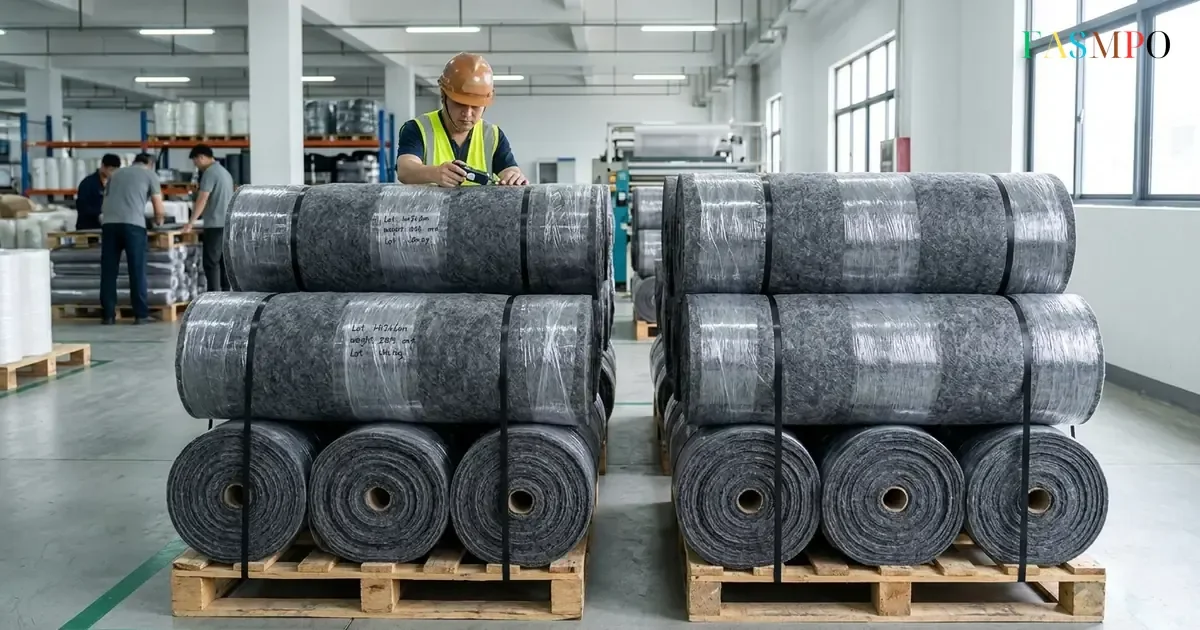
Regulatory compliance guide for industrial needle-punched felt exports: ISO/ASTM testing benchmarks, GRS/OEKO-TEX certifications, and HS Code 5602 classification.
Industrial Needle-Punched Felt Export Compliance: ISO/ASTM Testing, HS Code & Documentation
For corporate compliance managers, international customs brokers, and industrial tier-1 suppliers, importing needle-punched non-woven felt fabrics involves navigating a complex web of technical testing standards, sustainability certifications, and tariff classifications. Non-woven felts are widely integrated into safety-critical automotive interiors, regulated filtration assemblies, and high-performance civil infrastructure. A minor discrepancy in flammability test reporting, missing recycled content traceability under the Global Recycled Standard (GRS), or misclassification under the Harmonized System (HS) tariff schedules can result in severe port entry delays, customs penalties, or rejection by end-user quality audit teams. Establishing complete compliance alignment across accredited ISO/ASTM mechanical testing and export documentation ensures rapid customs clearance and uncompromised commercial acceptance.
Mechanical Testing Framework: ISO and ASTM Testing Benchmarks for Industrial Felt
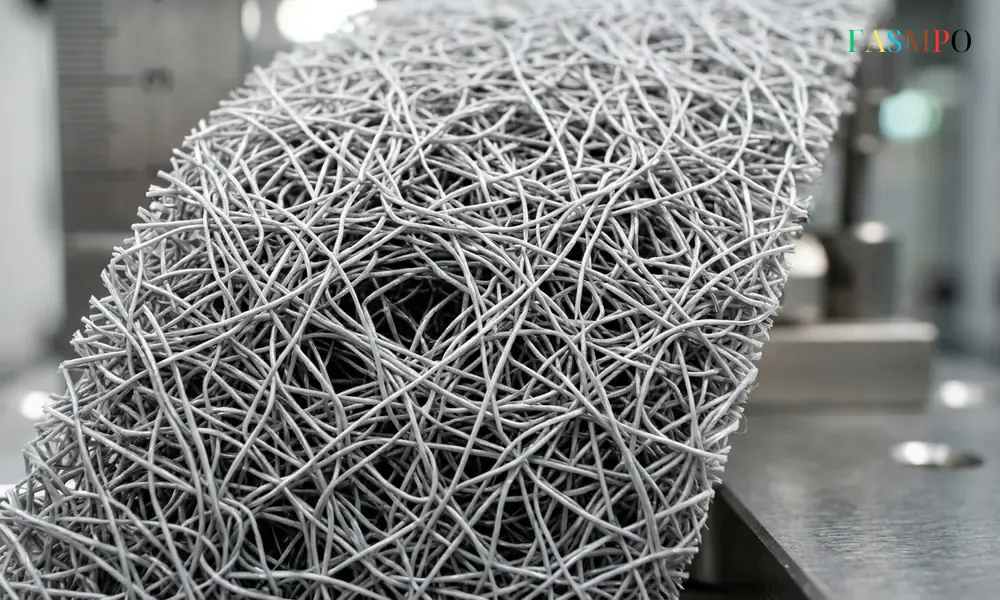
Industrial procurement specifications require laboratory verification of physical properties conducted in accordance with international standard test methods:
- Tensile Strength & Elongation (ISO 9073-3 / ASTM D5034 Grab Test): Measures the maximum tensile breaking force (in Newtons) and percentage elongation in both Machine Direction (MD) and Cross Direction (CD). High-performance needle felts deliver balanced MD:CD ratios (close to 1:1.2), preventing directional necking under tension during automated manufacturing.
- Puncture & Tear Resistance (ASTM D4833 / ISO 12236 CBR Puncture): Critical for geotextiles and floor underlayment, evaluating resistance against localized puncture from aggregate stones or sharp structural substrate protrusions.
- Air Permeability (ASTM D737 / ISO 9237): Calibrates airflow volume passing through a defined felt area at a set differential pressure (measured in L/m²/s or CFM), an essential quality benchmark for industrial dust collection bags.
- Flammability & Flame Retardancy (FMVSS 302 / ISO 3795): Required for automotive interior felt components, certifying that flame burn rates remain strictly below 100 mm/minute, self-extinguishing upon ignition removal.
Quality Management & Environmental Certifications: GRS, OEKO-TEX & ISO 9001
Global manufacturing brands—including tier-1 automotive assemblers and retail multinationals—demand third-party verified environmental and quality management accreditations.
| Certification Standard | Scope & Audited Criteria | Operational Value for Global Importers |
|---|---|---|
| ISO 9001:2015 | Quality Management System (QMS) across all manufacturing processes | Guarantees batch-to-batch repeatability in grammage (GSM), thickness, and mechanical tensile tolerances. |
| GRS (Global Recycled Standard) | Chain of custody tracking for recycled polyester fibers (rPSF) | Provides transaction certificates (TC) verifying genuine post-consumer recycled content for corporate ESG reporting. |
| OEKO-TEX® Standard 100 | Testing for harmful substances, heavy metals, formaldehyde, and VOCs | Certifies skin-safe, toxicologically benign felt suitable for vehicle passenger cabins, home storage, and retail consumer goods. |
Harmonized System (HS) Tariff Classification: Chapter 56 (HS 5602)
Declaring the correct Harmonized System (HS) code is paramount to preventing tariff disputes and ensuring proper customs clearance:
- Primary Heading HS 5602 (Felt, whether or not impregnated, coated, covered or laminated): This is the universal tariff classification for non-woven felt manufactured through needle punching or stitch bonding.
- Subheading HS 5602.10.00 (Needleloom felt and stitch-bonded fiber fabrics): The exact 6-digit international code representing mechanically needle-punched felt fabrics made from polyester (PET) or polypropylene (PP) staple fibers without chemical binders or woven scrims.
- Related Classifications: HS 5602.21 to 5602.29 apply to wool felts, while finished articles made from felt (such as automotive carpet mats with rubber backings or storage organizers) are classified under HS 5705.00 or HS 6307.90 according to final form.
Export Documentation Package for Frictionless Customs Release
Each ocean export consignment must be accompanied by a synchronized document set:
- Commercial Invoice & Packing List specifying exact net/gross weight, roll quantity, and square meter totals.
- Clean on Board Ocean Bill of Lading (B/L).
- Certificate of Origin (C/O): Form EUR.1 for the European Union (EVFTA preferential 0% duty), Form E for ASEAN-China (ACFTA), Form AK for South Korea, or standard Form B for general tariff zones.
- Factory Quality Inspection Report documenting verified batch GSM, tensile readings, and roll moisture content.
- GRS Transaction Certificate (when certified recycled polyester is ordered).
For comprehensive technical specifications and supplier compliance profiles, review our Needle Punched Felt Fabric Direct Supplier overview.
Commercial Compliance & Technical Sourcing Inquiries
FASMPO Co., Ltd. supplies fully compliant, lab-verified needle-punched non-woven felt fabrics from our vertically integrated manufacturing complex in Vietnam, producing 4,000 tons annually for global tier-1 industrial clients.
To request testing reports, GRS certification documentation, customized compliance packages, and FOB/CIF container quotes, contact our international trade office at sales@fasmpo.com or visit our corporate website at https://fasmpo.com.