
Comprehensive B2B buyer guide on frozen Pangasius fillet trimming grades: Well-Trimmed, Semi-Trimmed, Untrimmed, meat color grading, and reefer loading standards.
International whitefish importers and commercial food processors require rigorous standardization when contracting frozen Pangasius fillets (Pangasianodon hypophthalmus) from Vietnam. Defining physical trimming boundaries, meat color grades, and packaging parameters prevents contractual discrepancies and ensures high customer satisfaction across retail and foodservice channels. Learn more on our primary Frozen Pangasius Fillets catalog.
1. Biological Overview & Mekong Delta Processing Standards
Pangasius hypophthalmus, widely recognized as Tra fish or Basa, is intensively cultivated in strictly monitored freshwater aquaculture ponds throughout the Mekong Delta provinces, notably Dong Thap, An Giang, and Can Tho. Controlled feed management and strict compliance with national antibiotic surveillance programs provide clean, odorless, firm flesh. Following harvest, live fish are transported via well-boats directly to HACCP and BRCGS certified processing plants to prevent stress-induced lactic acid buildup.
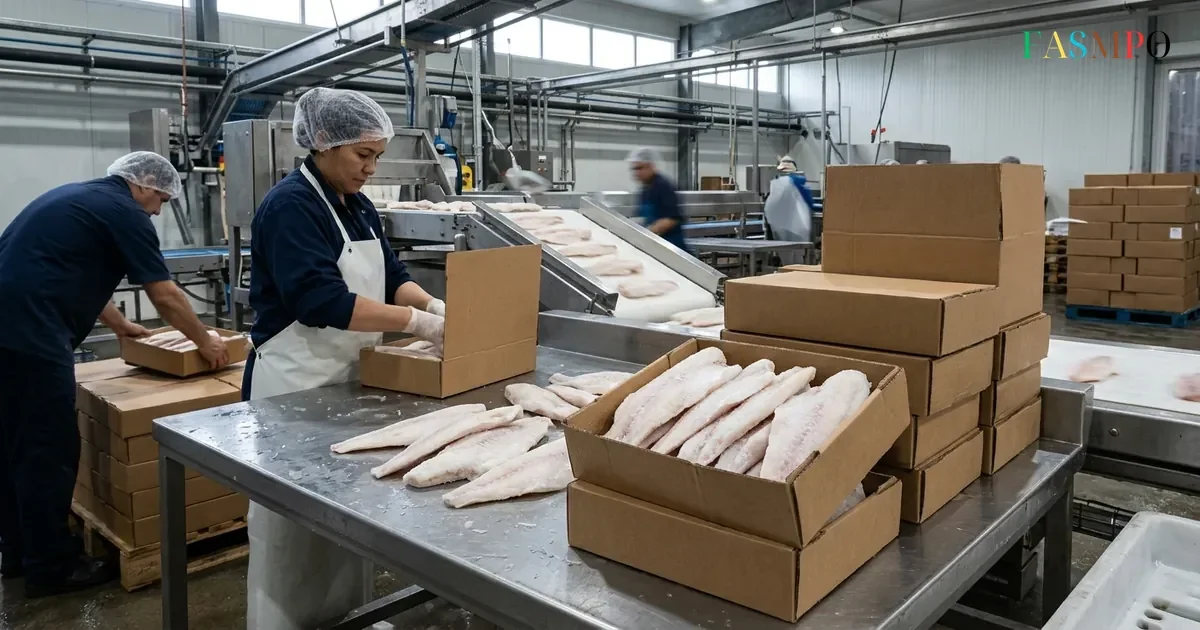
Automated processing lines handle high-capacity deheading, eviscerating, and dual-blade mechanical filleting. Skilled operators subsequently execute secondary trimming on temperature-controlled stainless steel tables, ensuring the raw material remains below 4°C throughout the line.
2. Trimming Grade Classifications: Well-Trimmed vs. Semi-Trimmed vs. Untrimmed
Trimming specifications determine both flesh yield and the commercial valuation of frozen Pangasius fillet shipments. Importers must explicitly specify trimming requirements in their purchase specifications:
- Well-Trimmed (Skinless, Boneless, PBO): Represents the highest commercial standard. Pin bones (PBO), outer skin, lateral dark red muscle (bloodline), belly flap (flank), and subcutaneous fat deposits are 100% excised. The final product presents a pristine, uniform fillet favored by Western European and North American retail supermarkets.
- Semi-Trimmed: Skinless and boneless, but retains a portion of the lateral red meat line and belly flap. This grade offers a cost-effective alternative for institutional catering and wholesale foodservice markets where slight visual variations are acceptable.
- Untrimmed: Skinless and boneless, retaining the complete natural belly flap and red meat. This grade is primarily destined for regional markets or downstream industrial secondary reprocessing into surimi or battered fish portions.
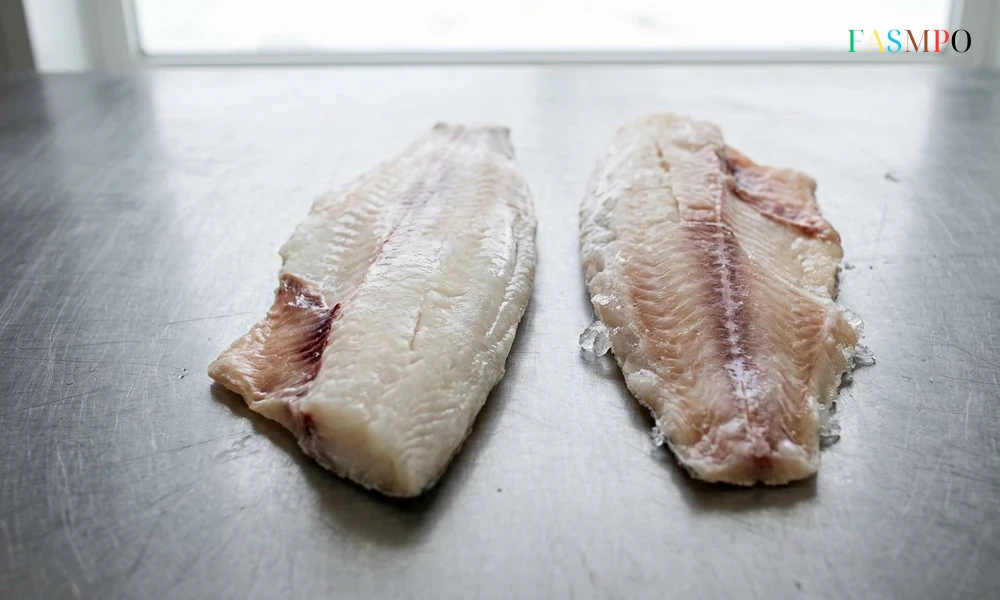
Technical inspection: Well-Trimmed frozen Pangasius fillet (top) with complete fat and redline removal versus standard cut.
3. Meat Color Sorting & Regional Market Preferences
The flesh coloration of Pangasius is governed by pond water quality, dissolved oxygen levels, and feed composition. Automated optical color sorting systems categorize trimmed fillets into three commercial tiers:
- Pure White (Grade A): Flawless ivory-white meat with zero yellow or pink tint. Commanded at a premium by high-end retail brands across the European Union, the United Kingdom, and the United States.
- Light Pink: Natural light pink blush across the core flesh. Widely imported across Eastern Europe, Latin America, and Southeast Asia for general retail distribution.
- Light Yellow: Slightly warm or yellowish hue. Extensively utilized in Middle Eastern, African, and institutional foodservice markets where frying and heavy seasoning are utilized.
4. Weight Sizing Brackets, IQF Freezing & Container Payload
Frozen Pangasius fillets are graded into standard weight brackets prior to individual quick freezing (IQF):
| Metric Sizing (g/piece) | Imperial Sizing (oz/piece) | Target Culinary Application |
|---|---|---|
| 60 – 120 g | 2 – 4 oz | Fast food fish burgers, pre-portioned hospital/school catering |
| 120 – 170 g | 4 – 6 oz | Standard retail supermarket packs, individual dinner portions |
| 170 – 220 g | 6 – 8 oz | Full-service restaurant grilling, baked fish entrees |
| 220 g+ | 8 oz+ | Buffet carving, fish portion dicing, industrial value-added processing |
Following continuous spiral IQF freezing reaching core temperatures of -18°C or colder, fillets undergo protective ice glazing (0% to 20% according to contract). Packaging options include 10kg bulk master cartons with blue food-grade polyethylene liners or 1kg plain/printed retail pouches. For international ocean freight, a 40ft High Cube reefer container accommodates 2,300 to 2,500 master cartons, achieving an optimal net payload of 23.0 to 25.0 metric tons floor-loaded.
5. B2B Sourcing Checklist & Procurement RFQ for Importers
When requesting formal FOB or CIF quotation proposals for Vietnamese frozen Pangasius fillets, international procurement directors should specify:
- Required trimming standard: Well-Trimmed, Semi-Trimmed, or Untrimmed.
- Flesh color grade: Pure White, Light Pink, or Light Yellow.
- Additive formulation: Untreated (Chemical-Free), Citric Acid/Salt, or Food-grade STPP (with target moisture limit).
- Target net drained weight and protective ice glazing percentage.
- Packaging format: 10kg bulk carton, 1kg retail pouch, or interleaved block.
FASMPO Co., Ltd. provides certified, direct-factory frozen Pangasius supply with full health certification and lab batch analysis. To submit an RFQ or request physical sample shipments, contact our international export desk at info@fasmpo.com or visit https://fasmpo.com.