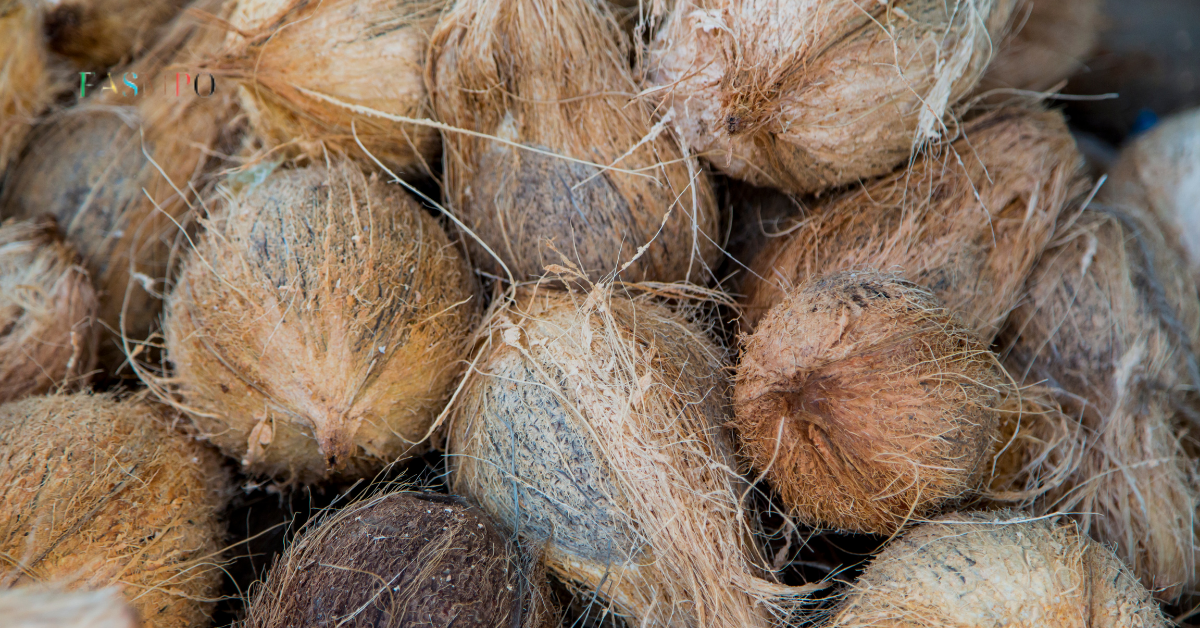
Export-standard dried coconut is a product that requires comprehensive control from raw materials, preliminary processing, heat treatment, drying, sorting, packaging, storage, to documentation.
Dried coconut is one of the important processed products from Vietnamese coconuts, widely used in confectionery, instant food, beverages, cereals, snacks, plant-based products, and many industrial processing formulas. Compared to fresh coconut meat, dried coconut has significant advantages in terms of shelf life, transportability, production stability, and flexibility when mixing with other ingredients.
In international trade, the concept of "export-standard dried coconut" is not simply about drying and packaging the product. A shipment wishing to be exported needs to meet many criteria: suitable raw materials, standard color, no unusual taste or smell, controlled moisture content, uniform particle size, safe microbiological standards, proper packaging, clear labeling, and transparent testing records. For demanding markets such as Europe, the US, Japan, South Korea, or Australia, importer requirements may be even higher than the basic standards.
What are the export-standard dried coconuts?
Export-grade dried coconut is generally understood to be the white flesh of mature coconuts, which has been shelled, peeled, washed, cut/shredded/ground, heat-treated, dried, and sorted by size. In English, this product is often called "desiccated coconut." This is a form of dried coconut that is not sweetened, salted, roasted, or flavored, if applied according to the basic standards for dried shredded coconut.
The important point is that "export standards" are not a single set of regulations applicable to all markets. In fact, standards depend on three layers of requirements. First, there are international or national standards, for example, reference criteria from the Codex or Vietnamese National Standards (TCVN). Second, there are the import regulations of each market, relating to food safety, pesticide residues, additives, labeling, and traceability. Third, there are the specific requirements of the buyer, usually expressed in the contract, specification sheet, or Certificate of Analysis (COA).
So, when we say a lot dried coconutTo meet export standards, businesses need to clearly understand which standards their products meet, which markets they are intended for, what customer requirements they have, and what supporting documentation is needed. This is a point many small suppliers often overlook when first entering the export market.
_20260529081734.png)
Input material criteria
The quality of dried coconut starts with the raw coconut. Coconuts used to produce dried coconut are usually mature coconuts with thick flesh, good fat content, and free from rot, cracks, mold, or contamination. The coconut flesh must be naturally white, free from fermented odor, not sour, free from impurities, and unaffected by pests or diseases.
During the initial processing stage, the brown outer layer adhering to the coconut flesh needs to be thoroughly removed to ensure the finished product has a natural white or creamy white color. If the peeling is not done carefully, the finished product is prone to brown spots, reducing its sensory value and potentially being classified as a visual defect. If the washing is not thorough or water control is poor, the product is at risk of microbial contamination from the very beginning of the process.
For export products, factories need to control raw materials by batch. Each batch should have information about the sourcing region, import date, fruit condition, sensory inspection results, and storage conditions before processing. For high-end customers, traceability is not only an advantage but may become a mandatory requirement.
Sensory criteria for exported dried coconut
Sensory evaluation is the first set of criteria buyers can assess upon receiving a sample. Good quality dried coconut typically has a natural white to pale creamy white color. The product should not be dark yellow, gray, brown, or show signs of mold. The more uniform the color, the higher the likelihood of acceptance, especially for manufacturers of confectionery, chocolate, ice cream, and premium products.
In terms of smell, dried coconut should have the characteristic aroma of coconut, free from the smell of old oil, smoke, fermentation, mold, or chemicals. A rancid smell is a serious fault as it indicates that the fats in the coconut have oxidized or the product has not been properly preserved. For oil-rich products like dried coconut, odor control is crucial.
In terms of taste, dried coconut should have a mild, fragrant, natural flavor, without sourness, bitterness, saltiness, or any strange tastes. For unsweetened products, the sweetness should only be the mild, natural sweetness of the coconut flesh. If the product is intended for industrial food processing, buyers often evaluate the crispness, texture, fineness, uniformity, and blendability in the formula.
_20260529081751.png)
Important physicochemical parameters
In the export market, good sensory evaluation alone is not enough. Buyers often require specific physicochemical parameters to assess product stability. One of the most important parameters is moisture content. Excessively high moisture content increases the risk of mold, clumping, odor changes, and reduced shelf life. For exported dried coconut, moisture content is usually controlled at low levels according to standards or specific customer requirements.
The next criterion is oil content. Based on oil content, dried coconut can be divided into high-fat and low-fat groups. High-fat dried coconut is often preferred in confectionery, chocolate, ice cream, cake fillings, and products requiring a distinctly rich flavor. Low or medium-fat dried coconut may be suitable for some recipes requiring reduced fat or other structural stability.
The acidity of the extracted oil is also a noteworthy indicator. If the acidity is high, the product may have undergone fat hydrolysis or improper preservation. Total ash reflects the mineral content and may be related to the cleanliness of the raw material, washing and drying processes, and the level of contamination. In addition, the levels of foreign matter, extraneous objects, and unwanted plant fragments also need to be strictly controlled.
A professional supplier should have a clear specification sheet for each product line: moisture content, oil content, free fatty acids or acidity, ash content, particle size, color, odor, microbiology, packaging specifications, and shelf life.
_20260529081802.png)
Microbiological and food safety criteria
Dried coconut is a low-moisture product, but that doesn't mean there's no microbiological risk. Some microorganisms can survive in a dry environment for extended periods, especially if the product becomes contaminated after heat treatment. Therefore, microbiological control is a mandatory requirement for export products.
Commonly considered indicators by buyers include Salmonella, E. coli, Coliform, total aerobic microorganisms, yeasts, molds, and sometimes Staphylococcus aureus or other indicators depending on the market. Of these, Salmonella is a risk that is very strictly controlled because dried coconut can be used directly in food or blended into ready-to-eat products.
To reduce risks, the factory needs appropriate heat treatment processes, and hygiene control of equipment, wash water, air, personnel, and the packaging area. After heat treatment and drying, the product must be protected from re-contamination. This is why the post-drying area needs to be designed to be clean, dry, and free from insects, dust, pests, and improper flow between the dirty and clean areas.
For international customers, certifications such as HACCP, ISO 22000, FSSC 22000, BRCGS, IFS, Halal, Kosher, or Organic can be a significant advantage. Some certifications are not always legally mandated but are required by importers as a condition of trade.
_20260529081814.png)
Classification of dried coconuts according to oil content
A common way to classify dried coconut is by its oil content. High-fat dried coconuts typically have an oil content of around 60% or more. This product line has a distinctly rich and creamy flavor, suitable for confectionery, chocolate, ice cream, cake fillings, cookies, cereals, granola, and other products requiring a natural creamy texture.
Low-fat or partially defatted dried coconut typically has a lower oil content. This type can be used in some products requiring reduced fat content or other technological properties. However, with a low oil content, the texture and aroma may differ from the full-fat variety.
Specifying the oil content is crucial as it directly impacts price, application, and buyer expectations. If the contract requires full-fat but the delivered goods have a low oil content, the shipment may be subject to claims even if other specifications are met.
Sorting dried coconuts by particle size.
Particle size is a crucial classification criterion in the dried coconut trade. Common categories include extra fine, fine, medium, and special cuts such as flakes, chips, shreds, long shreds, or fancy cuts. Each size serves a different purpose.
Extra-fine dried coconut has very small kernels, suitable for smooth toppings, fillings, dough mixes, candies, or products requiring a uniform surface. Fine coconut has small to medium kernels and is commonly used in cookies, cakes, chocolate, and packaged foods. Medium coconut has larger kernels, providing a more pronounced chewy texture, suitable for toppings, granola, snacks, or products where the coconut texture is visible.
Flakes, chips, and shreds are commonly used for garnishes, toppings, snacks, salads, desserts, or premium products. For these forms, in addition to moisture content and color, buyers are also interested in breakage rate, uniformity, percentage of whole pieces, and ability to maintain shape after transport.
Classification by color and quality level
Some importers classify dried coconuts by quality grade based on color, defect rate, uniformity, aroma, and impurity levels. High-grade coconuts typically have a natural bright white color, uniform size, a distinct aroma, few defects, no brown shell fragments, and no visible impurities. This grade is often used for premium food products, retail, confectionery exports, and brands requiring visually appealing products.
Medium-grade products may still meet food safety standards, but they may have less color or uniformity. This type is often used in industrial processing, where the product is mixed or further processed. However, regardless of the grade, exported products must still ensure food safety and be free from hazardous contaminants.
Because the terminology for quality grades can differ between suppliers and buyers, businesses should avoid using vague terms unless a criteria table is provided. It is best to express them using specific parameters: color, particle size, moisture content, oil content, defect rate, microbiological indicators, and packaging conditions.
_20260529081830.png)
Packaging specifications for exported dried coconut
Packaging plays a crucial role in protecting the quality of dried coconuts throughout the storage and international shipping process. Dried coconuts are typically packed in multi-layered bags, with an inner PE layer or suitable food-grade bag, and an outer layer of kraft paper, PP bags, or cardboard boxes depending on customer requirements. Common packaging sizes include 10kg, 25kg, or other quantities as per contract.
Packaging needs to be moisture-proof, dust-proof, oxygen-restrictive, odorless, and suitable for food contact. The seams or seals must be strong to prevent leaks, contamination, or moisture absorption. For containerized goods, control over loading conditions, pallets, liners, container dryness, and the risk of condensation is necessary.
The label on the packaging should clearly show the product name, product type, particle size, net weight, batch number, production date, expiration date, country of origin, manufacturer information, storage conditions, and any certifications. For products destined for specialized markets, the label must comply with the regulations of the importing country.
Storage and transportation
Dried coconuts should be stored in a cool, dry place, away from direct sunlight, high heat sources, strong-smelling chemicals, and areas with insects or pests. Because the product is high in fat, temperature and oxygen can affect its flavor over time. If not stored properly, dried coconuts are prone to rancidity, discoloration, or a decline in sensory quality.
In export shipping, businesses need to ensure containers are clean, dry, free of strange odors, and not punctured or leaking. If the shipping route is long or passes through areas with large temperature differences, measures to prevent moisture, such as using desiccant bags or ensuring suitable container conditions, should be considered. A shipment that meets factory standards can still be subject to complaints if it absorbs moisture, clumps together, or acquires odors during transit.
Documents required for export shipments
A professionally exported shipment of dried coconuts typically requires a complete set of documentation. This includes, at a minimum, the contract, commercial invoice, packing list, bill of lading, certificate of origin (if requested by the customer), and a test certificate or Certificate of Analysis (COA). The COA should show key parameters such as moisture content, oil content, free fatty acids or acidity, ash content, microbiological data, and other agreed-upon parameters.
Depending on the market, customers may require additional certifications such as quarantine certificates, health certificates, fumigation certificates, organic certificates, Halal certificates, Kosher certificates, BRCGS certificates, IFS certificates, FSSC 22000 certificates, ISO 22000 certificates, or pesticide residue test reports. Larger customers may also require factory audits, traceability system assessments, raw material supplier inspections, and hazard control documentation.
Therefore, businesses should not only prepare the goods but also the ability to demonstrate their capabilities. In food exports, transparent documentation is sometimes just as important as the actual quality of the product.
Common mistakes that cause dried coconuts to be rejected.
Common defects include excessive moisture content, Salmonella contamination or failure to meet microbiological standards, uneven color, rancid odor, brown shell fragments, impurities, incorrect grain size, torn packaging, incorrect labeling, missing documentation, or discrepancies between the COA and the contract.
Another problem is when the supplier sends a very nice sample, but the actual delivered goods are different. This is a serious issue in international trade as it affects reputation and the possibility of long-term cooperation. To avoid this situation, the factory needs to have a batch-by-batch quality control process, retain control samples, and agree on specifications from the outset.
Conclude
Dried coconut Export standards require products to undergo comprehensive control from raw materials, preliminary processing, heat treatment, drying, sorting, packaging, warehousing, to certification documentation. Quality is not only about the product's beautiful white color or natural aroma, but also about physicochemical and microbiological indicators, stability, traceability, and the ability to meet the specific requirements of each market.
For Vietnam, dried coconut is a product with great potential thanks to its abundant coconut resources, improving processing expertise, and stable international demand. However, to increase export value, businesses need to shift from a mindset of selling raw materials to one of supplying standardized products with clear specifications, appropriate certifications, and the ability to meet the stringent criteria of importers.
For international buyers, choosing a dried coconut supplier shouldn't be based solely on price. Considerations include production capacity, testing records, consistency between batches, food safety certifications, packaging specifications, and long-term delivery capabilities. For Vietnamese producers, this presents an opportunity to build a high-quality dried coconut brand, contributing to raising the profile of Vietnamese agricultural products in the global market.