
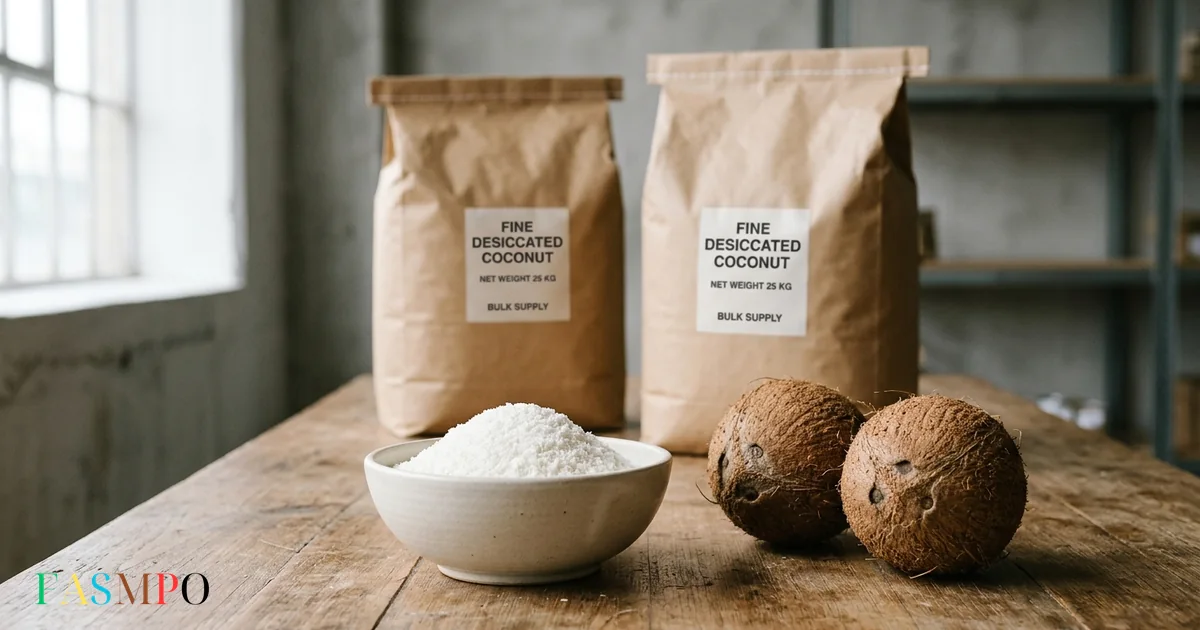
Buyer guide to specifying high-fat, fine-grade desiccated coconut: set the oil category, sieve criteria and moisture requirements, compare samples, and confirm lot details. Codex CXS 177-1991 is a general reference only; FASMPO availability is unconfirmed.
Desiccated Coconut High Fat Fine Grade Manufacturer: Buyer Sourcing Criteria
This educational sourcing guide is for bakery and confectionery buyers comparing desiccated coconut specifications. The Codex Standard for Desiccated Coconut is used here only as a general reference. FASMPO’s consulted coconut catalog lists semi-husked dried coconut and coconut growing media; it does not confirm the availability or specification of desiccated coconut high-fat fine grade. Nothing on this page states that FASMPO makes, supplies or complies with the Codex requirements for this product.
What “high fat” and “fine grade” should mean in an RFQ
A grade name alone is not enough to compare suppliers. Ask the seller to define the oil-content category and give a measurable sieve specification. In CXS 177-1991, sizing is optional. The standard distinguishes desiccated coconut without oil extraction from a partially oil-extracted product, so the buyer should state which type is being requested.
| Buyer criterion | Codex CXS 177-1991 general reference | What to request from a prospective supplier |
|---|---|---|
| Fine sizing | Optional fine category: at least 80% by weight passes easily through a square-aperture 1.40 mm sieve; no more than 20% passes through a 0.71 mm sieve. | Full sieve distribution, sieve aperture shape and size, test procedure, and whether the supplier’s “fine” label follows this definition. |
| Oil content | At least 60% m/m for the products described without oil extraction; 35% to below 60% m/m for the partially oil-extracted product described in the standard. | Declared oil-content range, whether oil was extracted, test method and the lot acceptance range. |
| Moisture | Maximum 4% m/m in the standard. | Lot result, test method, sampling basis and agreed acceptance limit. |
| Colour, flavour and odour | The standard describes natural white to light creamy-white colour and characteristic flavour; odour should not be mouldy, cheesy, smoky, fermented, rancid or otherwise undesirable. | Written sensory criteria, sample condition and a process for resolving differences between the approved sample and shipment. |
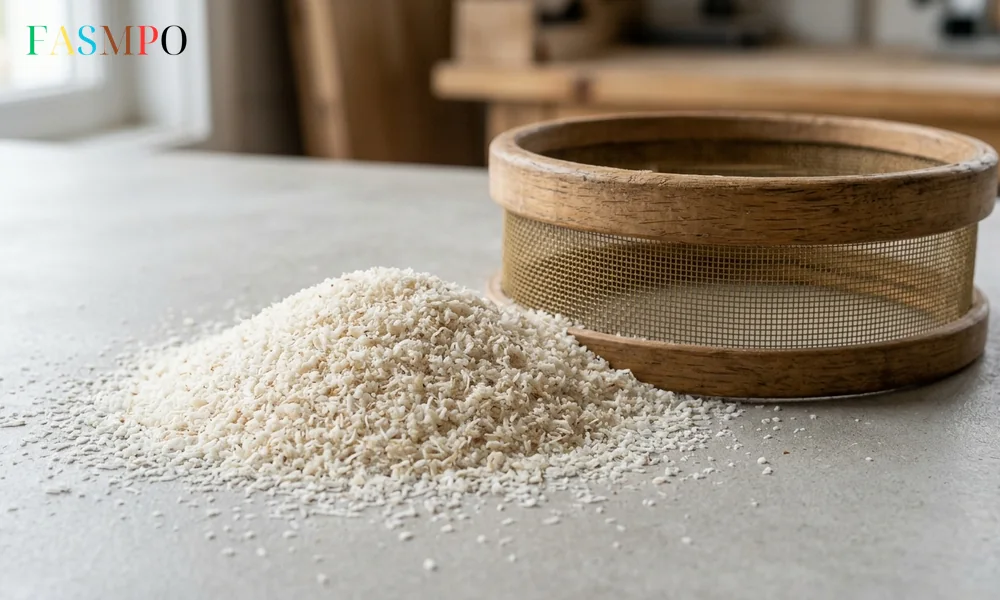
These values describe the general Codex reference only. They are not a FASMPO specification, a supplier guarantee, or evidence that any lot complies. The referenced Codex text was adopted in 1991 and revised in 2011. Read the official FAO/WHO Codex PDF, CXS 177-1991 and verify the current version before applying its definitions to a purchase.
Food-safety and packaging questions to settle
The standard also addresses composition, sensory quality, contaminants, hygiene, packaging, transport, storage, labelling, analysis and sampling. It does not provide one universal numeric microbiological limit in this text. Buyers should identify the rules and acceptance criteria relevant to their market and use, then agree how each is verified with the supplier.
Clarify the specification before comparing prices
- State whether the product is unextracted or partially oil-extracted, and define the required oil-content range.
- Define “fine” through sieve apertures and pass-through percentages; do not rely on the grade name alone.
- Agree moisture limit, sensory acceptance criteria, microbiological criteria, test methods and sampling plan.
- Specify intended use, package format, pack size, label language, lot identification and storage conditions.
How bakery and confectionery buyers can compare samples and quotations
Send the same written specification to each prospective supplier. Compare quotations only after confirming that each quote covers the same product form, oil-content category, sieve distribution, moisture limit, verification method and packaging requirements. Record any exception beside the quoted value rather than treating an unconfirmed point as accepted.
When assessing samples, compare them against the written criteria and the agreed sieve and test procedures. Ask how the sample represents a production lot, how acceptance is determined and what happens if shipment results differ. A Codex reference can help buyers frame the questions, but it does not replace a purchase specification, market review or supplier evidence.
RFQ checklist
- Product form and whether the oil has been partially extracted.
- Oil-content target and the required method of analysis.
- Fine-grade sieve apertures, pass-through percentages and test method.
- Moisture, sensory and microbiological acceptance criteria.
- Sampling, lot acceptance, packaging, labelling, destination and requested trade terms.
- Supplier’s current availability, origin, MOQ, lead time and supporting evidence; treat each as unconfirmed until the supplier replies in writing.
Availability and next step
The available FASMPO catalog reviewed for this guide does not list desiccated coconut high-fat fine grade. Its listing of semi-husked dried coconut is a different product and should not be used as evidence of desiccated-coconut specifications or availability. Confirm whether a prospective supplier handles this product before requesting a product quotation.
Use the checklist above to request a comparable specification and quotation from a supplier. If you need to ask FASMPO whether this category is available, first verify availability with the company; no product offer, price, MOQ, origin, packaging, certification or lead time is stated here. For general company information, visit the FASMPO English website.